Top Freight Shipment Services for Global Buyers
Choosing the right freight shipments service can determine whether global buying feels controlled or chaotic. A container leaving Shanghai, a pallet crossing Rotterdam, or a parcel reaching São Paulo each requires different planning, pricing, and risk management.
The United Nations Conference on Trade and Development reports that maritime transport carries over 80% of international trade by volume. The World Trade Organization projected merchandise trade growth of 2.6% in 2024 and 3.3% in 2025. These figures show opportunity, but they also expose pressure on capacity, schedules, ports, and budgets. Small delays can become expensive when inventory waits on a dock.
Frank Appel, former DHL Group chief executive, described logistics as “the backbone of global trade.” That simple phrase remains useful. Reliable providers combine ocean, air, rail, and road options with customs expertise, shipment visibility, insurance guidance, and responsive support. They should explain transit windows clearly, not hide uncertainty behind attractive prices.
No service fits every buyer.
A low-cost ocean route may suit durable, planned inventory. Air freight may protect a product launch, but its premium can damage margins. Rail can balance speed and emissions on selected corridors, although availability varies. Data from the DHL Global Connectedness Report also suggests that international networks remain resilient, yet resilience should not be mistaken for certainty.
This guide compares leading freight shipments services for global buyers. It considers delivery performance, tracking quality, geographic coverage, scalability, and practical customer experience. The comparison is not perfect. Service levels change by route, season, and supplier, so buyers should verify current quotes before committing.
Global Freight Modes: UNCTAD Says Sea Carries Over 80% of Trade Volume
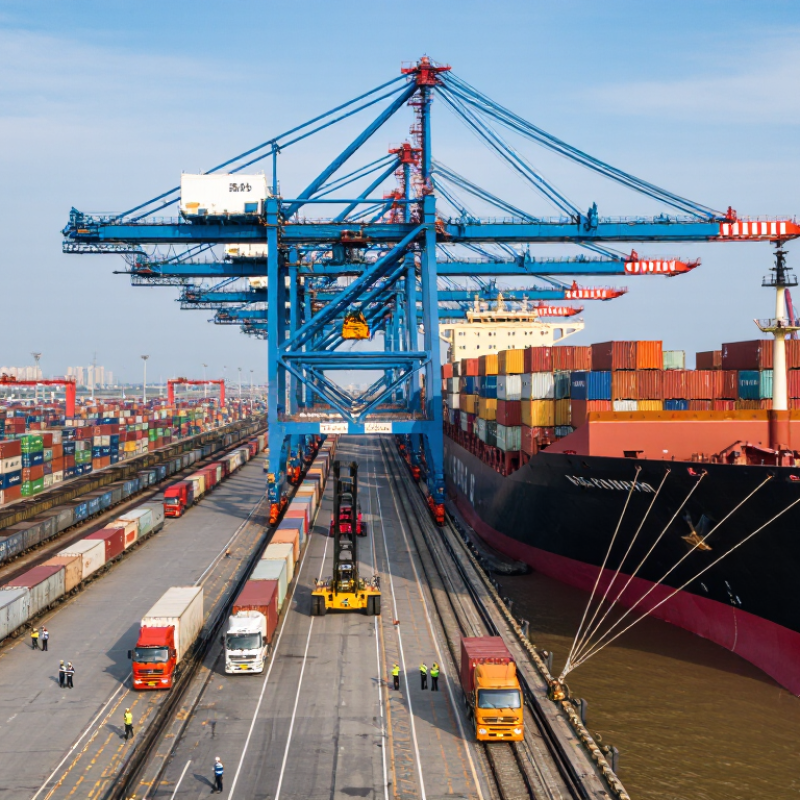
For global buyers, sea freight remains the main route for moving goods across continents.
UNCTAD reports that maritime transport carries over 80% of global trade by volume. This figure shows why ports, containers, and sailing schedules matter to international purchasing decisions. A factory order may spend several weeks at sea before reaching a distribution center.
Sea freight suits heavy, bulky, or non-urgent cargo.
It usually offers lower costs per unit than air transport. However, buyers must allow time for port handling, customs checks, inland delivery, and possible weather delays. A container can leave the origin port on schedule and still arrive late. That reality is easy to underestimate.
Air freight supports urgent, lightweight shipments,
while rail and road can connect inland production areas with ports or final markets. The best freight mode depends on product value, delivery promises, route conditions, and cash flow. Buyers should compare the full landed cost, not only the transport quote. Insurance, storage, duties, and local trucking can change the calculation.
A practical shipping plan needs accurate dimensions, reliable documents, and a clear delivery window.
Tracking helps, but it cannot remove every risk. I would also review the plan before placing each order, because demand forecasts and port conditions change. Sometimes, a faster shipment is not the wiser choice.
Ocean Shipping Choices: FCL, LCL, Incoterms, Costs, and Transit Times
Top Freight Shipment Services for Global Buyers
Ocean Shipping Choices: FCL, LCL, Incoterms, Costs, and Transit Times
Ocean freight remains central to global trade. UNCTAD’s Review of Maritime Transport 2024 reports that ships carry over 80% of world merchandise trade by volume. FCL suits one buyer using a full container, with fewer handling points and better cargo control. LCL shares container space, helping smaller orders, but consolidation can add warehouse transfers and delay risks. Small shipments are not always cheaper.
Incoterms define who arranges transport, insurance, customs work, and delivery risk. Under FOB, the buyer usually controls the main ocean leg. Under CIF, the seller arranges freight and basic insurance to the named port. The exact rule and named place matter. A vague quotation can create expensive misunderstandings.
Cost planning should include ocean freight, origin handling, documentation, destination charges, duties, inland delivery, and possible storage. Transit estimates also need caution. The World Bank’s 2023 Logistics Performance Index found that international shipments take about 44 days on average from the exporting country to the importing country. Port congestion, weather, blank sailings, and customs inspections can extend that window. I would not promise a fixed arrival date. Compare FCL and LCL quotes using the same Incoterm, cargo dimensions, weight, ports, and delivery scope. A slightly higher quote may be safer when it includes clear destination charges.
Top Freight Shipment Services for Global Buyers
Ocean Shipping Choices: FCL, LCL, Incoterms, Costs, and Transit Times
The chart shows typical port-to-port transit-time ranges for major ocean corridors. LCL shipments generally require additional consolidation and deconsolidation, making them slower than FCL shipments on the same route.
Indicative planning costs are commonly about USD 1,800–4,500 per 40-foot container for FCL and USD 80–180 per cubic meter for LCL, excluding local charges, customs duties, insurance, and peak-season surcharges. Under FOB, the buyer typically arranges the main ocean freight; under CIF, the seller arranges freight and basic insurance to the destination port; under DAP, the seller delivers to the named destination while the buyer usually handles import clearance and duties. Actual rates and schedules vary by season, route, cargo type, and port congestion.
Planning benchmarks based on commonly published ocean freight transit ranges; they are not live freight quotations.
Air Freight Selection: IATA Reports 2024 Cargo Demand Growth of 11.3%
Air freight selection matters more as global buying cycles become less predictable. IATA’s 2024 full-year report recorded an 11.3% rise in global cargo tonne-kilometres. Available capacity grew 7.4%, lifting the average load factor to 49.4%. That gap signals firmer demand, not unlimited space. Timing still matters.
For global buyers, the practical choice begins with cargo behavior. Use air transport for high-value parts, seasonal stock, medical equipment, and goods with costly delays. Avoid treating every urgent order as an air shipment. An air waybill, carton dimensions, chargeable weight, and airport cut-off time can change the quoted cost. Small errors hurt. IATA also connected 2024 demand strength with e-commerce activity and inventory replenishment, although conditions varied by trade lane.
Before booking, compare transit time, routing reliability, temperature needs, and handling limits. Ask for a written rate basis and check whether fuel, security, storage, and customs fees are included. UNCTAD’s Review of Maritime Transport 2024 described continuing disruption in ocean shipping. Longer sea routes may increase air freight’s relative value for selected shipments. Still, IATA’s 11.3% growth figure is global. It does not predict every lane. That is where my judgment can fail. A cheaper service may win on paper, then lose through missed inventory windows.
Rail and Road Freight: Comparing Speed, Coverage, Cost, and Reliability
For global buyers, rail and road freight solve different problems. Rail usually offers steadier transit for long inland routes, often moving containers across borders in two to four weeks. Road freight can be faster for nearby markets, especially with direct pickup and delivery. Yet border queues, weather, and driver availability can erase that advantage. Rail coverage depends on terminals and scheduled corridors. Road networks reach smaller factories and warehouses, but distance raises fuel and handling costs. Neither option is automatically reliable.
Cost comparisons need more than quoted rates. Rail may reduce cost per container over long distances, while road can win for short hauls and flexible volumes. Rail schedules are less adaptable after cutoff times. Road carriers can adjust loading times, but congestion creates uncertain arrival windows. In my shipping reviews, the most useful measure is not average transit time. It is the percentage of shipments arriving within the planned receiving slot. A cheap service that misses production appointments can become expensive.
Tips: Match rail with predictable, high-volume cargo and inland terminal access. Choose road when delivery points are scattered or urgent. Ask for recent performance data, including border dwell time, damage rates, and late-delivery frequency. Build a buffer of one or two days. I once underestimated a holiday traffic surge; the route looked efficient on paper, but the warehouse was idle. Recheck assumptions before booking.
Freight Forwarder Evaluation: Customs, Tracking, Insurance, and Carbon Metrics
Top Freight Shipment Services for Global Buyers
Freight Forwarder Evaluation: Customs, Tracking, Insurance, and Carbon Metrics
Global buyers should evaluate freight services beyond price and transit time.
Customs performance begins with accurate commercial invoices, packing lists, and tariff classifications. Ask for shipment-level clearance records and documented exception procedures. A missing invoice can delay a container for days. UNCTAD’s Review of Maritime Transport 2024 states that shipping carries over 80% of global trade by volume. High volume, however, does not guarantee dependable clearance.
Tracking should show real milestones, not vague status labels.
Request timestamps for pickup, port entry, departure, arrival, and final delivery. The World Bank’s Logistics Performance Index 2023 identifies tracking and tracing as a core logistics capability. Insurance needs scrutiny. Confirm insured value, exclusions, deductibles, and claims evidence before booking. Carrier liability may not cover the full commercial loss after water damage or theft. I would challenge any quote that hides these limits. A cheap shipment can become costly after one incident.
Carbon data should be measurable, not decorative.
Ask whether calculations use fuel consumption, distance, cargo weight, and well-to-wake emissions. The International Maritime Organization’s 2023 greenhouse-gas strategy targets net-zero emissions from international shipping by or around 2050. It also sets 2030 checkpoints, including stronger emissions reductions. Compare grams of CO2e per tonne-kilometer across similar routes. Keep the calculation method in writing. Reports often look precise. Real routes are messier.