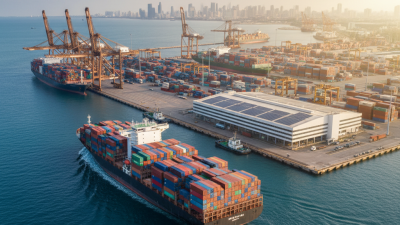
Container freight is the organized movement of goods inside standardized containers. It connects factories, warehouses, ports, rail networks, and final destinations. A shipment may begin with cartons loaded into a 20-foot or 40-foot container. The box then travels by truck to a terminal, moves onto a vessel, and continues by rail or road after discharge. Simple in appearance. Complex in practice.
UNCTAD’s Review of Maritime Transport 2024 confirms that maritime shipping carries more than 80% of global merchandise trade by volume. This figure explains why container freight remains central to international supply chains. However, the container itself is only one part of the process. Freight forwarders arrange bookings, carriers provide vessel space, terminals handle cranes, and customs authorities review shipment documents. A bill of lading records the cargo, route, and transport responsibilities.
The World Bank and S&P Global’s Container Port Performance Index assesses hundreds of ports through vessel turnaround efficiency. Its findings show how delays can develop during berthing, crane operations, or container transfers. A single missed connection may leave a box waiting several days. That delay can affect inventory, production schedules, and customer delivery promises.
Reliable container freight therefore depends on planning, accurate data, secure packing, and realistic schedules. Weather, port congestion, equipment shortages, and changing demand still create uncertainty. The system is efficient, but not flawless. Understanding each handoff helps shippers compare routes, manage costs, and make better logistics decisions.
Container freight is the movement of goods inside standardized ISO containers. These steel boxes protect cargo during trucking, rail transport, and ocean voyages. Common lengths are 20 and 40 feet. A 20-foot container equals one TEU, or twenty-foot equivalent unit. A 40-foot container usually counts as two TEUs.
The process begins with cargo packing, weight checks, and container booking. Workers secure the goods, close the doors, and record the container number and seal. A terminal crane then lifts the box onto a vessel. At the destination, another crane removes it for customs clearance and inland delivery. Small details matter. Poor weight distribution can damage products or create handling risks. Moisture can also harm cargo, even inside a closed container.
UNCTAD reports that over 80% of global merchandise trade by volume moves by sea. This share explains why container freight supports such a large part of international commerce. Yet the figure needs careful reading. Trade value, weight, and volume produce different results. A container may travel smoothly across oceans but wait several days at a crowded terminal. That delay is easy to miss in a simple diagram. TEU statistics show capacity, not the full human and operational effort behind each shipment. Even standardization has limits, because cargo shape, temperature, port infrastructure, and local transport conditions still affect performance.
A 20-foot container is the basic measuring unit in container freight. Under ISO 668, its external length is about 6.058 metres, with a width of 2.438 metres. This standard box equals 1 TEU, or twenty-foot equivalent unit. A 40-foot container usually equals 2 TEU, although usable space varies by design.
TEU measures equipment capacity, not exact cargo volume. Internal fittings, wall thickness, and cargo weight can reduce practical capacity. A standard unit may carry roughly 33 cubic metres, but dense goods can reach the gross weight limit first.
The common maximum gross mass is 30,480 kilograms. That distinction matters during booking, loading, and vessel planning.
UNCTAD’s Review of Maritime Transport 2024 reported approximately 858.9 million TEUs in global container port throughput during 2023. The figure shows the scale of the system, but it does not reveal empty repositioning, port delays, or unused space. A neat number can mislead.
Tips: Confirm whether your quotation uses TEU, FEU, cubic metres, or chargeable weight. Measure cartons after palletizing, not before. Leave clearance for doors and lashing. Check the container’s verified gross mass before dispatch. In practice, I would also compare the packing plan with the actual loading sequence. The spreadsheet may fit. The doorway may not. Data from the International Maritime Organization supports verified mass declarations, while ISO 668 remains the reference for container dimensions. Standards create consistency, but careful checking prevents costly assumptions.
Container freight begins long before a box enters the terminal. Prepare exact cargo data: commodity description, package count, dimensions, gross weight, HS code, origin, destination, and delivery terms. Small errors spread quickly. A wrong carton count can change space, charges, and customs entries. UNCTAD’s Review of Maritime Transport 2023 states that ships carry over 80% of global merchandise trade by volume. That scale makes accurate booking data operational control.
Pack for movement, not display. Use strong cartons, moisture protection, corner protection, and clear handling marks. Keep heavier pieces low and distribute weight evenly. The verified gross mass, or VGM, includes cargo, packaging, pallets, and securing materials. Under SOLAS requirements, the shipper must provide VGM before loading. Weigh the sealed container, or calculate the total from verified package weights. Keep the method and equipment record. It may feel excessive. It prevents dangerous assumptions.
Customs preparation needs the same discipline. Provide a commercial invoice, packing list, export declaration, bill of lading instructions, and origin documents when required. Check that values, quantities, and HS codes match across every file. The World Bank’s Logistics Performance Index 2023 assesses 139 economies, including customs, tracking, and shipment reliability. Its framework shows why disconnected information creates delays. In practice, even experienced teams miss one field. A realistic pre-booking check compares the documents against the physical cargo, carton by carton. Perfect paperwork cannot repair poor packing.
| Preparation Area | Required Cargo Data or Document | Information to Provide | Practical Example | Why It Matters | Typical Check |
|---|---|---|---|---|---|
| Cargo Data | Product description | Clear description of the goods, their intended use, material, and condition. | “New household ceramic tableware for retail sale” | Supports freight classification, customs review, safety screening, and accurate booking. | Confirm that the description is specific and does not use vague terms such as “parts” or “general cargo.” |
| Cargo Data | Commodity or HS classification | Applicable Harmonized System code and any additional national tariff code required by the importing country. | A ceramic tableware shipment may be classified under a code beginning with 6912, subject to product details and local rules. | Determines customs duty, import controls, documentation requirements, and statistical reporting. | Verify the code with the relevant customs authority or a qualified customs professional. |
| Cargo Data | Quantity and packaging | Number of packages, package type, units per package, and whether the cargo is palletized or loose-loaded. | 20 pallets containing 480 cartons; 24 cartons per pallet. | Allows the carrier and terminal to plan handling, storage, loading, and equipment requirements. | Package count must match the packing list and shipping instructions. |
| Cargo Data | Gross weight and volume | Total cargo weight, packaging weight where applicable, measurements, and cubic volume. | Gross cargo weight: 8,450 kg; volume: 28.6 m³. | Used to select a suitable container, calculate charges, check weight limits, and plan vessel loading. | Use consistent units and confirm that weight and dimensions are measured rather than estimated. |
| Cargo Data | Container and service type | FCL or LCL service, requested container size, temperature requirements, ventilation needs, and special equipment. | FCL shipment requiring one standard 40-foot dry container. | Ensures the shipment is booked with equipment appropriate for its cargo characteristics. | Check internal dimensions, maximum payload, door opening, and route availability. |
| Packing | Packaging and cargo securing plan | Packaging material, pallet specifications, load distribution, blocking, bracing, and moisture protection. | Cartons placed on treated pallets, corner-protected, stretch-wrapped, and secured with suitable straps. | Reduces shifting, crushing, water damage, and handling injuries during inland and ocean transport. | Keep the center of gravity low, distribute weight evenly, and avoid blocking container doors or safety markings. |
| Packing | Wood packaging compliance | Required treatment and marking for wood pallets, crates, dunnage, or other regulated wood packaging. | Wooden pallets carry an internationally recognized treatment mark when required by the destination country. | Non-compliant wood packaging can be refused, treated, returned, or delayed at the destination. | Check the importing country’s plant-health requirements before packing. |
| Safety | Dangerous goods assessment | Whether the goods contain chemicals, batteries, aerosols, flammable materials, or other regulated substances. | Lithium batteries require classification, packaging, marks, labels, and transport documents when applicable. | Determines acceptance, segregation, labeling, emergency information, and applicable transport rules. | Provide the correct safety data sheet or dangerous goods declaration when required. |
| VGM | Verified Gross Mass | Verified total mass of the packed container, including cargo, pallets, packaging, securing materials, and tare container weight. | Cargo and packing: 21,300 kg; container tare: 3,800 kg; VGM: 25,100 kg. | A verified mass is required before a packed container can be loaded onto a vessel under international safety rules. | Use an approved weighing method and retain the supporting record. |
| VGM | VGM submission details | VGM value, unit of measurement, responsible party, authorized signatory, and submission reference where applicable. | VGM: 25,100 kg; submitted by the shipper’s authorized representative before the stated cut-off. | Late, missing, or inaccurate VGM information may result in a loading delay or additional handling. | Confirm the carrier’s cut-off time and ensure the VGM agrees with the final packed condition. |
| Customs | Commercial invoice | Seller, buyer, invoice number, date, currency, Incoterms® rule, product value, quantity, origin, and payment terms. | Invoice value: EUR 42,000; quantity and unit prices shown by product line. | Customs uses the invoice to assess value, duties, taxes, and eligibility for trade controls. | Ensure the invoice matches the packing list, purchase order, and declared shipment value. |
| Customs | Packing list | Package marks, package count, contents, net weight, gross weight, dimensions, and container or seal details when available. | Pallets 1–20; total net weight: 7,980 kg; total gross weight: 8,450 kg. | Helps customs officers, terminals, and consignees identify and reconcile the cargo. | Package totals and weights must agree with the booking and commercial invoice. |
| Customs | Export declaration information | Exporter and consignee details, classification, customs value, origin, transport mode, and destination. | Export declaration submitted for containerized sea freight before the cargo leaves the exporting country. | Authorizes export clearance and provides authorities with required trade data. | Check whether the exporter, customs broker, or logistics provider is responsible for filing. |
| Customs | Certificates and permits | Licenses, certificates of origin, health certificates, inspection documents, or product-specific permits when required. | A certificate of origin may be needed to support preferential tariff treatment under an applicable trade agreement. | Some goods cannot be cleared or may receive different duty treatment without the correct supporting documents. | Confirm requirements for the commodity, origin, destination, and intended use before booking. |
| Booking | Routing and schedule request | Place of receipt, port of loading, port of discharge, final delivery location, requested departure date, and transit preference. | Door-to-port movement with a requested departure window and an estimated transit time of 24–30 days. | Allows the transport provider to offer available sailings, connections, equipment, and cut-off dates. | Review the route, transshipment points, terminal cut-offs, and expected delivery date. |
| Booking | Final booking confirmation | Booking reference, confirmed vessel or service, container type, cargo cut-off, documentation cut-off, and cargo-receiving instructions. | One 40-foot dry container confirmed; cargo cut-off two working days before the planned departure. | Creates the operational instruction for container release, delivery, gate-in, and documentation processing. | Compare the confirmation with the original shipping instructions and report discrepancies immediately. |

At the port, container freight changes hands between road, rail, yard equipment, and ocean vessels. Ship-to-shore cranes lift steel boxes from trucks or rail wagons. Each movement follows a digital work order and a verified container number. Timing matters because one delayed box can interrupt several loading sequences.
A vessel’s stowage plan is more than a simple stacking diagram. Planners check container weight, destination, stability, and discharge order. Heavier units usually sit lower, while containers for earlier ports remain accessible. Twist locks secure the stacks between deck levels. Crane operators still depend on clear signals, accurate data, and careful weather monitoring. Small errors create expensive delays. Reality is less tidy than a planning screen.
UNCTAD has reported a global container fleet capacity of about 28.5 million TEUs, showing the scale of the maritime network. TEU means a twenty-foot-equivalent unit, not always one physical container. A forty-foot container counts as two TEUs.
Inside the terminal, automated gates may record arrival times, but human checks remain important. Damaged corner fittings, unclear labels, or mismatched records can stop a move. Port teams therefore compare documents with the container condition before loading.
The process is highly organized, yet it is not flawless. Congestion, wind, equipment faults, and incorrect weight information can still reshape the vessel’s schedule.
After a vessel arrives, the container is discharged and moved into the terminal yard. Its journey is not finished. The consignee or appointed agent must submit accurate customs documents and wait for official release. Missing invoices, unclear cargo descriptions, or incorrect measurements can delay collection. Customs release is never automatic.
Once released, a drayage carrier schedules pickup within the terminal’s availability window. The driver checks the container number, seal, and visible condition before leaving. At the receiving site, staff should record damage, unloading time, and any shortage immediately. In practice, delivery appointments can be too optimistic. Traffic, port congestion, and limited warehouse space often change the plan. After unloading, the empty container must return to an approved depot before the allowed free time expires. Late return charges may apply, even when the delay seems minor.
Tips: Confirm release status before booking a truck. Match the container number with every document. Keep photos of the seal and container condition. Ask the depot about empty-return instructions early. One overlooked email can disrupt the entire move. A careful checklist helps, but it cannot replace active communication with the terminal, carrier, and receiving team.