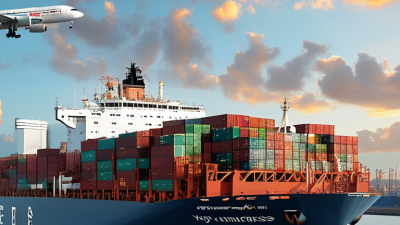
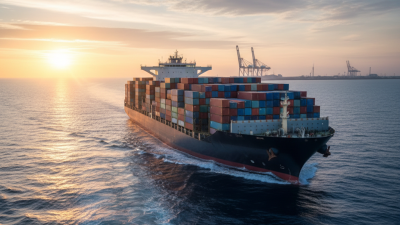
Global sourcing in 2026 will demand more than the lowest ocean freight quote. Buyers must weigh transit reliability, port congestion, emissions data, insurance, and changing trade requirements. A shipment from Ningbo to Rotterdam may look simple on paper. In practice, a missed sailing can disrupt factory schedules, retail launches, and cash flow. ocean shipping remains the backbone of international trade, but it is not automatically the safest choice for every purchase.
This guide explains how to compare ocean shipping options with practical sourcing decisions in mind. It considers full-container loads, consolidated cargo, carrier schedules, route design, documentation, and landed cost. Experienced procurement teams usually request several quotes and verify cut-off times before booking. They also check container availability and transshipment risks, not just advertised transit days. Small details matter. A two-day buffer can protect a production plan. A vague surcharge can damage it.
Reliable decisions require evidence from freight forwarders, carriers, customs specialists, and internal shipment records. Forecasting tools can help, yet no model predicts every storm, strike, or sudden port restriction. That is where judgment matters. We will also examine sustainability claims carefully, because “green” shipping figures may use different calculation methods. Some assumptions will be imperfect. They should be tested against actual invoices, delivery performance, and supplier feedback. The goal is not to promise flawless transport. It is to build a resilient, transparent shipping strategy for global sourcing in 2026.
In 2026, define your ocean shipping needs before comparing freight rates. UNCTAD’s Review of Maritime Transport 2024 reports that over 80% of global merchandise trade moves by sea. That scale does not make every route suitable. Start with cargo details: product type, dimensions, weight, handling needs, and monthly volume. A stable flow of 12 containers may suit a contracted full-container plan. Irregular shipments may need shared-container services. They require more coordination.
Map the complete route, not only the ocean leg. Record factory distance, port congestion, transshipment points, customs timing, and final delivery requirements. The World Bank’s Logistics Performance Index 2023 evaluates timeliness, tracking, and logistics competence, showing why a low quote can hide operational weakness. Build a realistic delivery window with buffer days. Perfect forecasts are not realistic.
Cost should include inland transport, terminal charges, documentation, storage risk, insurance, and possible delays. The International Maritime Organization estimates shipping creates about 3% of global greenhouse gas emissions. Therefore, emissions reporting and cleaner-fuel options should enter the sourcing brief. They may raise short-term costs, but ignoring them can weaken future planning. Define service priorities clearly: lowest cost, fastest transit, stable schedules, lower emissions, or balanced performance. Your first choice may still be wrong. Review it against actual shipment data after each quarter.
| Shipping Need | Recommended Ocean Option | Typical Planning Range | Best-Fit Shipment Profile | Key Advantages | Main Limitations and 2026 Planning Notes |
|---|---|---|---|---|---|
| Small or Irregular Shipments | Less-than-container load (LCL) | Usually below 15 CBM | Multiple suppliers, trial orders, replenishment stock, or cargo that does not fill a container | Lower upfront commitment; suitable for frequent smaller purchases | Charged by volume or weight, with consolidation and deconsolidation fees. Door-to-door transit is commonly longer than FCL because of cargo handling. |
| Full Container Requirement | Full-container load (FCL) | Often economical from about 15 CBM upward | Stable purchase volumes, palletized cargo, high-value goods, or shipments requiring a sealed container | Lower handling exposure, simpler documentation, and more predictable cargo control | The exact break-even point depends on origin, destination, commodity, local charges, and container availability. |
| Standard Dry Cargo | 20-foot or 40-foot dry container | 20-foot: about 33 m³ internal volume; 40-foot: about 67 m³ | Packaged goods that do not require temperature control or special equipment | Broad availability and straightforward loading plans | Usable capacity is lower than nominal internal volume because of packaging, pallets, securing materials, and weight restrictions. |
| High-Volume, Low-Density Cargo | 40-foot high-cube container | About 76 m³ internal volume; approximately 30 cm more height than a standard 40-foot container | Furniture, textiles, packaging materials, and other bulky products constrained by volume rather than weight | More cubic capacity without increasing the container footprint | Confirm maximum permissible gross weight and road restrictions at both origin and destination. |
| Perishable or Temperature-Sensitive Goods | Refrigerated container (reefer) | Common set-point range is approximately −30°C to +30°C, depending on equipment and cargo | Food, pharmaceuticals, chemicals, and other products requiring controlled temperature | Active temperature control during the ocean leg; monitoring can support quality assurance | Requires validated packaging, pre-trip inspection, correct ventilation settings, power availability, and contingency planning for delays. |
| Oversized or Heavy Cargo | Open-top, flat-rack, or other specialized equipment | Capacity depends on dimensions, weight, lifting points, and route | Machinery, industrial components, stone, steel, and cargo exceeding standard container dimensions | Accommodates unusual dimensions and top-loading requirements | Special equipment may have limited availability and higher terminal, handling, lashing, and inland transport charges. |
| Urgency and Inventory Risk | Direct or limited-transshipment ocean service | Port-to-port transit commonly ranges from about 15 to 45 days, excluding inland legs | Planned replenishment with moderate urgency and sufficient safety stock | Lower cost and emissions than air freight while supporting international scale | Actual schedules vary by trade lane, port rotation, weather, congestion, labor conditions, security events, and operational disruptions. |
| Low-Cost, Flexible Scheduling | Service with one or more transshipments | Often longer and more variable than direct service | Non-urgent products, demand that can be forecast, and shipments where freight cost is the priority | May offer broader port coverage and more sailing options | Each additional handling point can increase schedule variability, documentation complexity, and risk of missed connections. |
| Carbon-Reduction Target | Ocean freight instead of air freight, with shipment consolidation | Ocean transport generally produces substantially lower emissions per tonne-kilometre than air freight | Non-urgent, durable goods with sufficient lead time and predictable demand | Supports lower transport emissions and better container utilization | Compare emissions using the same scope, cargo weight, distance, load factor, and allocation method. Request route-specific data where available. |
| Landed-Cost Control | Door-to-door or multimodal ocean service | Evaluate total landed cost, not only the base ocean rate | Buyers managing supplier pickup, customs clearance, inland delivery, and final warehouse receipt | Improves budget visibility across the complete logistics chain | Include origin charges, ocean freight, surcharges, insurance, customs duties, taxes, destination fees, storage, demurrage, detention, and inland delivery. |
| Delivery Reliability | Schedule with defined service-level measures | Track planned versus actual departure, arrival, and cargo availability dates | Retail launches, production inputs, seasonal products, and orders linked to customer commitments | Creates measurable performance targets and supports corrective action | Measure port-to-port and door-to-door performance separately; a vessel arrival does not always equal cargo availability for pickup. |
| Customs and Compliance | Shipment plan based on correct HS classification and trade terms | Confirm documentation before cargo cutoff | Products subject to import permits, labeling rules, safety standards, duties, or preferential origin requirements | Reduces clearance delays, reclassification risk, penalties, and unexpected duty costs | Validate HS codes, commercial invoices, packing lists, certificates of origin, product permits, and Incoterms with qualified customs professionals. |
| 2026 Resilience Planning | Multi-lane or multi-port sourcing strategy | Maintain alternative routes and approved logistics instructions | Critical components, concentrated sourcing regions, and goods vulnerable to disruption | Reduces dependence on one supplier, port, route, or sailing pattern | Alternative routes may cost more or require different inland networks. Test them before a disruption rather than during one. |