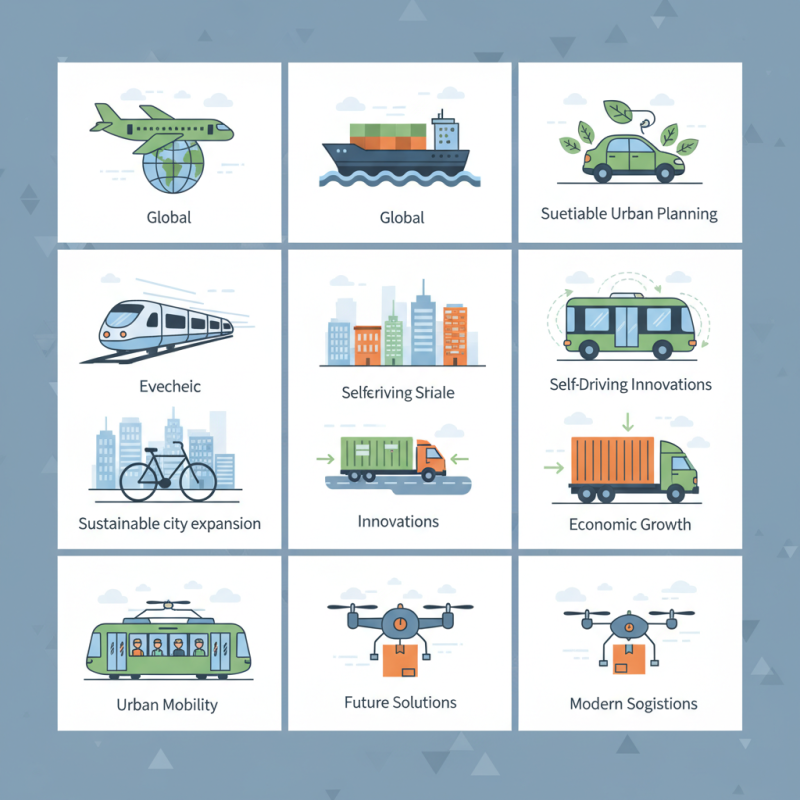
Top 10 Transport Vehicles You Need to Know About?
Transport vehicles play a crucial role in modern society. They facilitate movement and commerce globally. According to the International Transport Forum, transport accounts for around 7% of global GDP. The efficiency of these vehicles directly influences economic growth and urban development.
Industry expert Dr. Emily Johnson points out, "Understanding transport vehicles is essential for sustainable urban planning." As cities expand, the demand for reliable transport vehicles increases. Innovations in electric and autonomous vehicles are transforming the industry. Yet, challenges remain.
Issues like congestion and environmental impact require attention. The growing number of vehicles creates pollution and safety concerns. A holistic approach is necessary to address these challenges. Examining the top transport vehicles highlights their importance in shaping future solutions.
The Evolution of Transport Vehicles Throughout History
Transport vehicles have a fascinating history. From the simple wooden carts of ancient civilizations to today’s high-speed trains, evolution is clear. Early humans relied on animal power. Horses and oxen pulled heavy loads. This method had limits. The speed and distance traveled were restricted.
The invention of the wheel changed everything. It led to carts that could carry goods more efficiently. Later, steam engines revolutionized transport. Trains connected distant cities, transforming economies. Bicycles emerged next, offering personal mobility. However, they were not accessible for everyone. Cars followed, making travel faster but causing congestion. The environmental impact of these vehicles is significant.
In modern times, electric and hybrid vehicles are making waves. Yet, challenges remain regarding infrastructure and battery production. Innovations in public transport are also crucial. Cities are adapting, but traffic and pollution remain pressing issues. The journey of transport vehicles is a reflection of human progress and our need for improvement.
Top 10 Transport Vehicles You Need to Know About
Common Types of Transport Vehicles and Their Uses
Transport vehicles play a crucial role in our daily lives. They come in various forms. Each type is designed for specific needs. Cars are ideal for personal travel and commuting. Trucks cater to freight transport, moving goods across towns. Buses provide public transit, connecting many people to their destinations.
Motorcycles offer an adventurous option for single riders. They are cost-effective and nimble in urban environments. Bicycles are an eco-friendly choice. They promote health while reducing traffic congestion. In remote areas, ATVs serve a unique function. They navigate rugged terrains where traditional vehicles struggle.
Despite their usefulness, transport vehicles have downsides. Traffic jams can create stress and wasted time. Not everyone can afford a personal vehicle, leading to unequal access. Environmental concerns arise from fuel consumption and emissions. Every vehicle type has its limitations and potential for improvement. Understanding these aspects is key to better transportation solutions.
Top 10 Transport Vehicles You Need to Know About
| Vehicle Type | Primary Use | Capacity | Speed (km/h) |
| Sedan Car | Personal transportation | 5 passengers | 120 |
| Bus | Public transportation | 40-60 passengers | 80 |
| Bicycle | Personal transportation & exercise | 1 passenger | 35 |
| Motorcycle | Personal transportation | 2 passengers | 150 |
| Truck | Cargo transportation | 2-3 tons | 100 |
| Train | Passenger and freight transport | 200-1000 passengers | 300 |
| Airplane | Commercial air travel | 150-600 passengers | 900 |
| Ship | Cargo and passenger transport | 100-3000 passengers | 50 |
| Van | Transport goods and passengers | 8-15 passengers | 120 |
| Electric Scooter | Personal short-distance transport | 1 passenger | 25 |
Innovations in Transport Vehicles Engineering
Innovations in transport vehicle engineering are reshaping the way we travel. Think about electric vehicles. They are quieter and produce zero emissions. Many cities are investing in this technology. It’s a step toward cleaner air. However, the infrastructure still needs support. Charging stations must be more accessible.
Then there are autonomous vehicles. They promise enhanced safety and efficiency. Imagine sitting back while the car navigates through traffic. However, the technology is not perfect. There are still challenges with decision-making in complex situations. More testing is essential to ensure safety.
Another intriguing development is flying taxis. These vehicles aim to alleviate congestion on roads. They could revolutionize urban transport. But hurdles remain. They require extensive regulations and safety measures. Public acceptance is also a big question. Innovations are promising, but practical implementation needs careful consideration.
The Role of Transport Vehicles in Modern Economy
Transport vehicles play a crucial role in today's economy. They facilitate trade, connect communities, and drive growth. According to the International Transport Forum, transport accounts for about 7-10% of global GDP. This statistic underscores the significant economic impact of transport vehicles on international trade and local economies.
The efficiency of transport vehicles varies. Some vehicles provide speed; others focus on capacity. Trucks dominate freight transport, carrying approximately 70% of all goods. Meanwhile, rail transport is gaining traction, especially for bulk commodities. This shift reflects a growing demand for sustainable transport solutions.
Tip: Optimize your logistics. An efficient transport strategy can save costs. Evaluate your routes regularly to minimize delays and maximize service.
In terms of environmental impact, the transport sector is grappling with challenges. Emissions from transport vehicles contribute significantly to climate change. A report from the European Environment Agency indicates that transport emissions could rise by up to 30% by 2030 if no changes are made. Investing in cleaner technologies is essential.
Tip: Implement green practices. Encourage the use of electric or hybrid vehicles where possible. Additionally, consider adopting multi-modal transport solutions for reduced emissions. This reflects a commitment to a sustainable future while enhancing economic performance.
Environmental Impact of Different Transport Vehicles
Transportation plays a critical role in our lives, but its environmental impact is often overlooked. The Global Carbon Project reports that road transport accounts for about 24% of total CO2 emissions worldwide. This staggering figure highlights the need for sustainable alternatives. Electric vehicles (EVs) are gaining traction as an eco-friendly option, but their production still involves significant emissions. Even if they create less pollution during use, their battery manufacturing process can be damaging.
Public transport can mitigate this dilemma. Buses and trains typically have a lower carbon footprint per passenger compared to personal vehicles. According to the American Public Transportation Association, using public transport can reduce greenhouse gas emissions by 45 million metric tons annually. However, integrating outdated infrastructure with modern demands is a challenge. Cities often struggle to expand these systems, limiting their potential benefits.
Furthermore, bicycles are an excellent zero-emission alternative for short distances. They promote not just environmental sustainability but also public health. Yet, many urban areas lack the necessary infrastructure, such as bike lanes and parking, to support cycling. Investing in these improvements could boost usage. Despite a growing awareness, many still rely heavily on cars, creating a contradiction in sustainability efforts.