Top 10 Shipping Solutions to Boost Your Business Efficiency?
In today's competitive market, finding effective shipping solutions is crucial for any business. The right shipping strategies can save you time and money, directly boosting efficiency. Consider how shipping affects customer satisfaction. Delays or mishaps can lead to unhappy clients.
Implementing innovative shipping solutions can streamline your operations. Companies often overlook packaging and logistics management. Improving these areas may require reflection and adjustment. Shipping does not have to be a headache. With the proper approach, it can enhance your overall service delivery.
In this article, we explore the top 10 shipping solutions that can elevate your business. These solutions will offer more than just practicality; they can transform how you operate. Think creatively about implementing these strategies for real progress.
Understanding the Importance of Efficient Shipping Solutions for Businesses
Efficient shipping solutions play a crucial role in the success of any business. They reduce delivery times and improve customer satisfaction. A reliable shipping method can set a company apart from its competitors. Customers expect quick and transparent shipping updates. Delays can lead to frustration and lost sales. Businesses must ensure they meet these expectations.
While many companies focus on packaging, they often overlook logistics. Poor logistics can lead to elevated costs and unhappy customers. It's important to evaluate shipping options regularly. Changing needs can affect what works best. Implementing new technologies, like tracking software, can enhance service. However, adapting to these tools requires time and training. Some employees may resist changes, leading to inconsistency in service.
Not every shipping solution will be perfect for every business. What works for one may fall short for another. Constant evaluation and evolution are necessary. Businesses should gather feedback from customers. Analyzing shipping performance can highlight inefficiencies. Adopting a flexible approach will allow companies to pivot when needed. In the end, shipping is more than just logistics; it’s about building trust and loyalty.
Key Features to Look for in Shipping Solutions
Choosing the right shipping solution can significantly enhance business efficiency. Increased delivery speed is crucial. According to a recent industry report, 70% of consumers expect fast shipping options. Businesses should seek solutions that offer real-time tracking. This feature helps manage customer expectations and improves transparency. A lack of tracking can lead to dissatisfaction and lost sales.
Cost-effectiveness is another essential feature. Businesses should evaluate shipping rates and compare options. Many companies miss opportunities to negotiate better contracts. A flexible pricing model adapts to seasonal demand fluctuations. Additionally, consider integration capabilities with existing systems. Seamless integration minimizes disruptions. It ensures a smooth transition without extensive training.
Customer service is often overlooked yet vital. Look for solutions with responsive support teams. Issues can arise unexpectedly, and quick resolutions are needed to maintain customer trust. A negative experience can turn potential customers away. Remember, shipping may impact brand perception heavily. To thrive, businesses must reflect on their current shipping strategies and continuously seek advancements.
Top 10 Shipping Solutions to Boost Your Business Efficiency
Top Shipping Solutions That Enhance Logistics Management
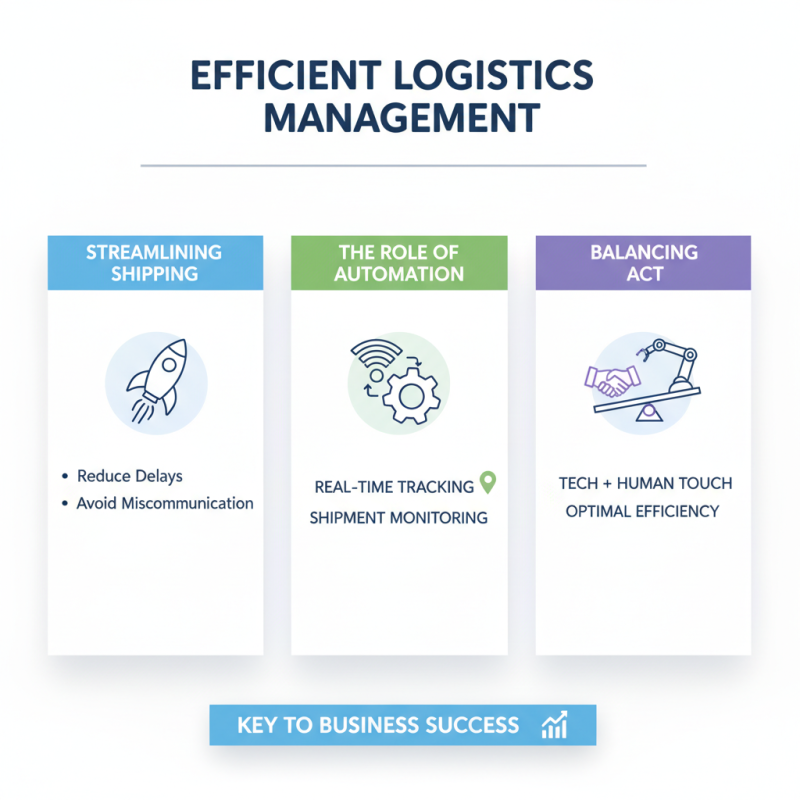
Efficient logistics management is crucial for any business aiming to thrive. One way to improve this is by streamlining shipping processes. Automation plays a significant role. Imagine a system that tracks shipments in real-time. This helps in reducing delays and avoids miscommunication. However, relying too heavily on automation can sometimes overlook the human touch. Balancing technology and personal interaction is key.
Another important aspect is understanding your shipping network. Analyzing routes can reveal hidden inefficiencies. For instance, using multiple carriers may seem cost-effective but can complicate management. Simplifying your logistics method might alleviate stress. Yet, this approach requires continuous evaluation. It can be challenging to determine the right balance between cost and effectiveness. Regular reflection on these strategies can reveal areas for improvement.
Finally, incorporating customer feedback can enhance shipping solutions. Often, businesses forget to engage with their clients about their shipping experiences. This is a missed opportunity for growth. Listening to their needs can lead to better service and increased satisfaction. Nevertheless, collecting and analyzing feedback is not always straightforward. Companies must be prepared to face constructive criticism.
Comparative Analysis of Cost-Effective Shipping Methods
Shipping efficiency can significantly impact business operations.
Cost-effective shipping methods are essential for maintaining a competitive edge.
Businesses often overlook the importance of evaluating various shipping solutions. A comparative analysis of these methods reveals both strengths and weaknesses.
One popular option is standard ground shipping. It is usually affordable and straightforward.
However, delivery times can be longer, which may frustrate customers. Express services are faster but often come at a premium.
Finding a balance between speed and cost is a common challenge for many businesses.
Another method worth considering is regional shipping. This approach can reduce costs by focusing on specific geographic areas.
Still, it may limit your reach. Companies must weigh the benefits of lower costs against potential lost sales opportunities.
Each shipping method requires careful consideration. Proper analysis can help businesses choose the best fit for their unique needs.
Leveraging Technology for Optimized Shipping Operations
In today's fast-paced business landscape, leveraging technology for shipping can significantly enhance efficiency.
Automation tools streamline shipping processes, reducing manual workload.
From label printing to tracking, technology can minimize errors. This leads to faster deliveries and improved customer satisfaction.
Real-time tracking apps allow customers to monitor their shipments. Transparency builds trust and encourages repeat business.
However, not all technology solutions fit every business. Companies must assess their unique needs.
Over-relying on technology can also bring challenges. For instance, system outages can disrupt operations.
Employees may feel overwhelmed by constant tech updates. Balancing human touch with automation is crucial.
Investing in analytics can further optimize shipping operations.
Businesses can track shipping patterns and identify bottlenecks. Understanding data helps tailor shipping strategies.
Yet, data management needs attention. Poor data quality can result in misguided decisions.
Continuous evaluation and adaptation are key to staying competitive in shipping processes.