Top 10 Logistics Tips for Streamlining Your Supply Chain Efficiency
Efficient supply chain management has become a cornerstone of competitive advantage in today's fast-paced business landscape. According to a recent report by the Council of Supply Chain Management Professionals (CSCMP), companies that excel in logistics can reduce operational costs by up to 20% and increase overall customer satisfaction by 25%. This highlights the critical role of logistics in streamlining operations and enhancing fulfillment processes. In a world where customer expectations are constantly rising, businesses must leverage best practices in logistics to stay ahead of the curve.
As emphasized by John Smith, a leading expert at Logistics Inc, "Streamlining your supply chain is not just about cutting costs, but about creating a seamless flow of information and goods that can adapt quickly to market demands." This perspective underscores the necessity for businesses to adopt innovative strategies that enhance efficiency and responsiveness within their supply chains. By focusing on key logistics tips, companies can significantly improve their operational workflows, ultimately leading to greater profitability and customer loyalty.
In this article, we will explore the top 10 logistics tips that can help organizations optimize their supply chain operations. These insights are designed to guide businesses in refining their processes, reducing waste, and achieving a more agile supply chain capable of meeting the ever-evolving demands of the market.

Understanding the Importance of Supply Chain Efficiency in Logistics
In the realm of logistics, understanding the importance of supply chain efficiency is paramount for businesses vying for a competitive edge.
A report by the Council of Supply Chain Management Professionals (CSCMP) highlights that efficient supply chains can reduce operational costs by up to 20%, directly influencing a company’s bottom line. This efficiency not only encompasses the speed of moving goods but also involves strategic planning and resource allocation to minimize waste and maximize productivity. In fact, organizations that incorporated data-driven decision-making into their supply chain practices saw a productivity increase of 15% on average, according to a study conducted by McKinsey.
Another critical aspect of supply chain efficiency is its impact on customer satisfaction. According to a survey by Deloitte, 79% of companies with high-performing supply chains achieve revenue growth superior to the average within their industries. When logistics operations are optimized, businesses can ensure timely deliveries, reduce lead times, and maintain lower inventory costs—all crucial elements that contribute to enhanced customer experiences. As customers increasingly expect speed and reliability, investing in supply chain efficiency is no longer just an operational concern, but a vital aspect of overall business strategy.
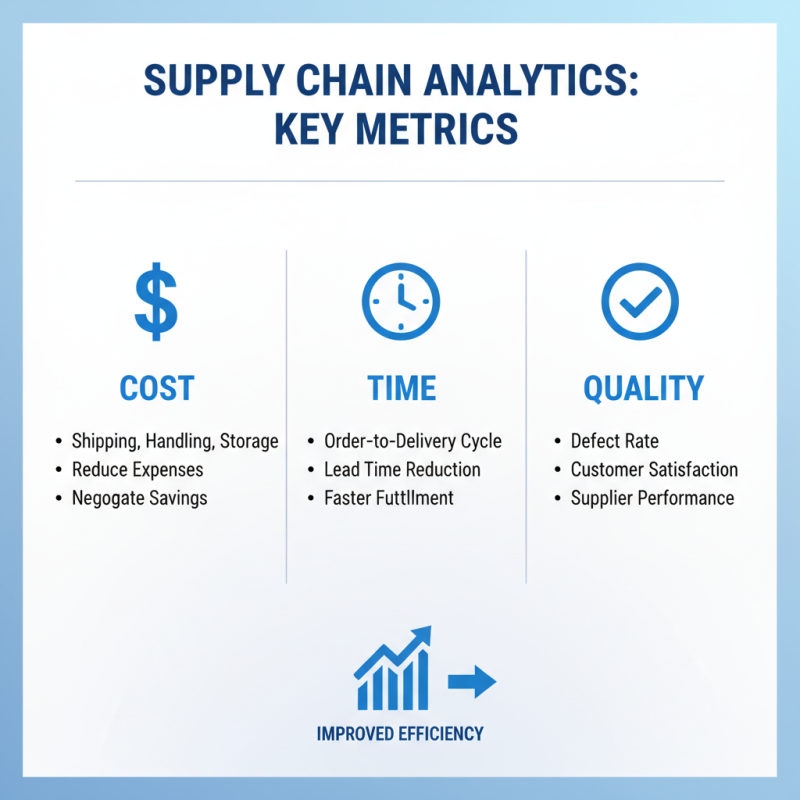
Analyzing Key Metrics: Cost, Time, and Quality in Supply Chain Management
Analyzing key metrics in supply chain management is crucial for improving overall efficiency. Three primary metrics that stand out are cost, time, and quality. By meticulously monitoring costs, organizations can identify areas where expenses can be reduced without sacrificing service levels. Tracking shipping, handling, and storage costs can reveal inefficiencies and opportunities for negotiation with suppliers or service providers, ultimately leading to a more economically sound supply chain.
Time is another critical metric, as it directly impacts customer satisfaction and inventory management. Organizations must measure lead times, from procurement through to delivery, to pinpoint delays and bottlenecks in the supply chain. By optimizing these timelines—whether through better forecasting, inventory management, or process automation—companies can enhance their responsiveness to market demand. This timely fulfillment not only improves customer trust but also reduces carrying costs associated with excess inventory.
Lastly, quality should not be overlooked, as it plays a significant role in sustaining customer loyalty and minimizing returns. Monitoring quality metrics through consistent inspections and customer feedback allows supply chain managers to maintain high standards and rectify any issues promptly. Integrating quality assurance into the supply chain process ensures that the end product meets customer expectations, thereby enhancing brand reputation and competitive advantage. Together, these metrics create a framework for continuous improvement and efficiency in the supply chain.
Leveraging Technology: Automation and Data Analytics for Streamlining Processes
In today’s fast-paced logistics environment, leveraging technology is crucial for enhancing supply chain efficiency. Automation acts as a catalyst in streamlining operations by minimizing manual tasks. By employing automated systems, businesses can reduce human error, accelerate processing times, and allocate resources more effectively. For instance, automated inventory management systems can track stock levels in real time, allowing companies to respond swiftly to demand fluctuations and minimize waste.
Data analytics, on the other hand, empowers organizations to harness vast amounts of information for decision-making. Analyzing shipment patterns, customer preferences, and operational costs enables companies to identify inefficiencies and forecast future needs. Predictive analytics can help in anticipating potential delays or disruptions, allowing for proactive measures to be taken. By integrating these technologies into their logistics processes, companies not only improve their operational agility but also enhance overall customer satisfaction through timely and reliable service delivery.
Best Practices for Inventory Management: Reducing Waste and Enhancing Flow
Effective inventory management is crucial for reducing waste and enhancing flow within the supply chain. According to a report from the Council of Supply Chain Management Professionals, companies face an average of 20% waste due to inefficiencies in inventory management. By implementing just-in-time (JIT) inventory strategies, businesses can significantly reduce excess stock and associated holding costs. This approach not only minimizes waste but also ensures that products are available when needed, thus improving customer satisfaction and operational efficiency.
Furthermore, adopting advanced technologies such as artificial intelligence and data analytics can provide insights into inventory trends and demand forecasting. A study by McKinsey found that organizations leveraging these technologies saw inventory cost reductions of up to 30%. This data-driven approach allows businesses to optimize stock levels, ensuring they have the right products on hand while reducing the capital tied up in excess inventory. Integrating automated inventory systems can also streamline processes, enhance accuracy, and ultimately lead to a more agile supply chain capable of responding quickly to market changes.
Top 10 Logistics Tips for Streamlining Your Supply Chain Efficiency
This bar chart illustrates the effectiveness of various inventory management practices in reducing waste and enhancing the flow in supply chain operations. The data reflects how implementing certain strategies can lead to improved efficiency.
Collaborative Strategies: Building Strong Partnerships and Communication Channels
Building strong partnerships and effective communication channels are fundamental to enhancing supply chain efficiency. Collaborative strategies enable businesses to align their goals and streamline processes, ultimately leading to improved performance. By fostering a culture of trust and transparency among partners, companies can share vital information, anticipate challenges, and develop coordinated responses. Regular meetings and updates are essential for maintaining a shared understanding and adjusting strategies as the market evolves.
Investing in technology to facilitate communication can significantly enhance collaboration. Tools that enable real-time data sharing, such as cloud-based platforms and collaborative software, allow stakeholders to stay informed and make data-driven decisions quickly. Additionally, cultivating personal relationships with key partners can create a supportive network that enhances resilience against disruptions. When all parties work together toward common objectives, the supply chain becomes more agile, responsive, and capable of meeting customer demands efficiently.
Top 10 Logistics Tips for Streamlining Your Supply Chain Efficiency
| Tip |
Description |
Benefits |
| 1. Enhance Communication |
Establish open lines of communication between all stakeholders. |
Improved collaboration and quicker problem resolution. |
| 2. Utilize Technology |
Invest in logistics management software for better tracking. |
Increased visibility and efficiency in operations. |
| 3. Build Strong Partnerships |
Collaborate with reliable suppliers and partners. |
Enhanced reliability and reduced operational risks. |
| 4. Monitor Key Performance Indicators (KPIs) |
Track performance metrics regularly to assess efficiency. |
Data-driven insights for continuous improvement. |
| 5. Optimize Inventory Levels |
Maintain optimal inventory to meet demand without excess. |
Cost savings and better cash flow. |
| 6. Train Employees |
Provide ongoing training to logistics staff. |
Increased productivity and reduced errors. |
| 7. Evaluate Shipping Options |
Compare various shipping methods for cost and speed. |
Optimized delivery times and reduced shipping costs. |
| 8. Implement Lean Practices |
Adopt lean methodologies to eliminate waste. |
Enhanced operational efficiency. |
| 9. Utilize Data Analytics |
Analyze data to inform decision-making and forecast demand. |
Better demand planning and resource allocation. |
| 10. Conduct Regular Reviews |
Schedule periodic reviews of supply chain processes. |
Identification of areas for improvement and adaptation. |