What is Global Shipping and How Does It Impact International Trade?
Global shipping plays a crucial role in facilitating international trade, connecting markets worldwide. As noted by industry expert John Smith, "Reliable global shipping networks empower businesses to reach new customers across continents." This statement encapsulates the essence of how global shipping influences economies.
The intricacies of global shipping involve more than just moving goods. Supply chains demand coordination and efficiency. Unexpected delays can disrupt trade, impacting both buyers and sellers. Companies must navigate regulations and logistics challenges in different countries. This complexity can lead to increased costs or missed opportunities.
Despite these challenges, global shipping remains vital for economic growth. It allows for the exchange of goods and services on an unprecedented scale. However, the industry must constantly adapt to changing markets and environmental concerns. Balancing efficiency with sustainability is an ongoing conversation. In considering these factors, the future of global shipping presents both opportunities and significant challenges.
What Is Global Shipping and Its Definition in International Trade?
Global shipping refers to the transportation of goods across international borders. It plays a crucial role in facilitating trade between countries. To understand its impact, we must recognize how shipping connects producers to consumers worldwide. By moving products efficiently, shipping helps businesses reach new markets.
In international trade, global shipping represents a complex network of logistics. This network includes various modes of transport, such as sea, air, and land. Each method has its pros and cons. For example, sea freight is often more economical for bulk goods but takes longer. Air freight is faster but more expensive.
However, global shipping is not without challenges. Delays can occur due to weather or port congestion. These issues can disrupt supply chains, affecting prices and availability. Moreover, environmental concerns arise from emissions associated with shipping. As the industry evolves, there is a growing call for sustainable solutions. Finding a balance between cost and environmental impact remains a critical challenge in global shipping today.
The Role of Global Shipping Logistics in Facilitating Trade Networks
Global shipping logistics play a crucial role in connecting markets across the globe. These systems ensure that goods move efficiently from one country to another. They are essential for trade networks to thrive. Without them, many businesses would struggle to access international markets. Sea routes, railways, and air transport all contribute to this network. Each method has its advantages and limitations.
The effectiveness of global shipping logistics is influenced by various factors. Delays can happen due to weather, customs, or port congestion. These disruptions can affect supply chains. Companies must adapt to changes and uncertainties in shipping dynamics. This need for flexibility can strain resources but also drive innovation. Logistics professionals must navigate complex regulations. They ensure compliance, which is vital for smooth operations.
Furthermore, sustainability is an ongoing challenge in logistics. Shipping contributes significantly to carbon emissions. Companies are exploring greener alternatives, but progress can be slow. Not every solution is practical for businesses. As trade networks expand, the balance between efficiency and environmental responsibility becomes essential. This ongoing dialogue around global shipping reflects a multifaceted industry that requires constant reflection and re-evaluation.
What is Global Shipping and How Does It Impact International Trade?
| Country |
Imports (in billion USD) |
Exports (in billion USD) |
Global Shipping Volume (in million TEUs) |
Impact on Trade (%) |
| United States |
2,400 |
2,100 |
60 |
7% |
| China |
2,100 |
2,500 |
200 |
10% |
| Germany |
1,200 |
1,400 |
30 |
5% |
| India |
900 |
1,200 |
25 |
8% |
| Brazil |
700 |
800 |
10 |
6% |
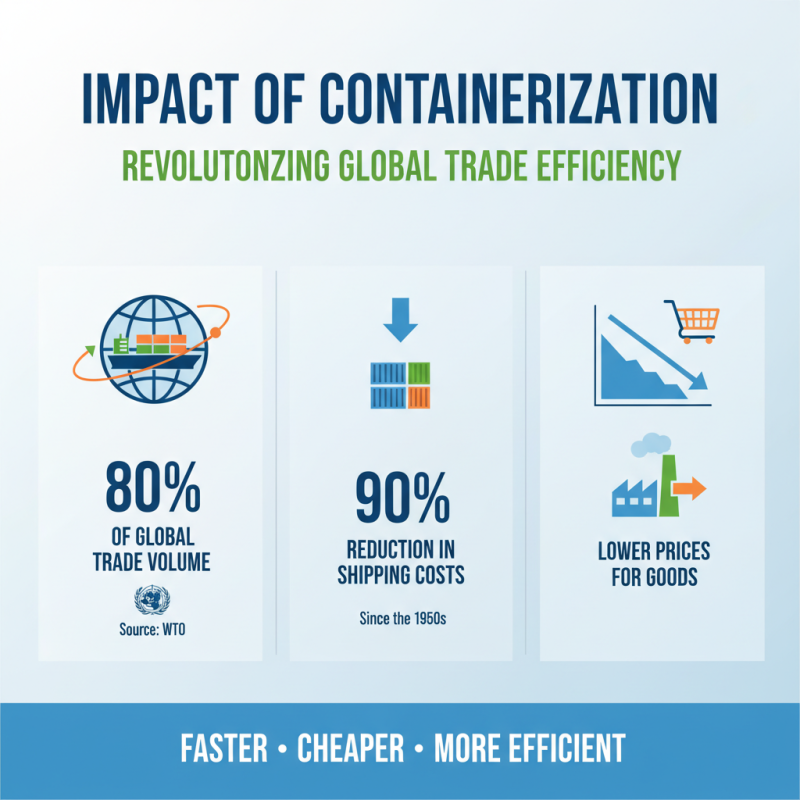
Impact of Containerization: Revolutionizing Global Trade Efficiency
Containerization has revolutionized global trade, significantly enhancing the efficiency of cargo transportation. According to the World Trade Organization (WTO), container shipping accounts for approximately 80% of global trade volume. This change has drastically reduced shipping costs, allowing companies to transport goods at lower prices. For example, the cost of moving goods by container has decreased by 90% since the introduction of container shipping in the 1950s.
The impact of containerization extends beyond cost reduction. It has also led to faster shipping times. Ships that use containers can load and unload cargo much quicker than traditional methods. In many cases, port turnaround times have halved. This efficiency promotes global connectivity and allows for a more responsive supply chain. However, it also raises concerns about port infrastructure and congestion, as many facilities struggle to manage the increasing volume of container transactions.
While container shipping has streamlined international trade, challenges remain. The reliance on specific container sizes limits flexibility. Additionally, disruptions in one part of the world can ripple through the entire supply chain. The COVID-19 pandemic highlighted these vulnerabilities, revealing the fragility of global networks. Adapting to these challenges will be essential for maintaining the benefits of containerization in the long run.
Global Shipping Statistics: Trade Volumes and Economic Contributions
Global shipping plays a critical role in international trade, enabling smooth movement of goods across borders. In 2021, global trade volumes reached 11 billion metric tons, driven largely by container shipping. This reflects a consistent growth trend, with expectations to increase by 4% annually. The International Maritime Organization estimates that shipping accounts for about 90% of world trade. Such statistics highlight the sector's substantial impact on the global economy.
The economic contributions of shipping are immense. The World Bank reports that for every $1 billion increase in exports, there is an associated 0.7% rise in GDP. Additionally, the sector generates millions of jobs worldwide, encompassing everything from logistics to shipbuilding. Importantly, while the benefits are significant, the industry faces challenges. Environmental concerns and regulatory pressures are growing. Companies must adapt to these changes or risk falling behind.
Tips for those engaged in global shipping: Monitor trade statistics to stay updated on market trends. Leveraging data can help in making informed decisions. Embrace sustainability to meet regulatory expectations. This is not just a trend; it’s essential for long-term viability in international markets.
Challenges in Global Shipping: Supply Chain Disruptions and Solutions
Global shipping plays a crucial role in international trade but faces many challenges. Supply chain disruptions, such as port congestion and global pandemics, have highlighted vulnerabilities. These disruptions affect delivery times and increase costs. Companies must adapt to these constant changes, which can be overwhelming.
Tips: Stay informed about global shipping trends. This knowledge helps businesses plan better. Understanding port conditions is essential. Being aware of potential delays allows for better inventory management.
Logistics managers often grapple with unpredictable factors. Weather, strikes, and geopolitical tensions can halt operations quickly. In light of these challenges, developing robust contingency plans becomes vital. A flexible supply chain can mitigate risks and improve response times. Companies should also consider diversifying shipping routes and methods. This can enhance reliability and resilience in their operations.
Tips: Regularly review shipping contracts and service agreements. This keeps terms clear and expectations aligned. Engage with reliable shipping partners who offer transparency and efficiency. Building strong relationships can ease the impact of unforeseen disruptions.