What is Container Number Tracking and How Does it Work?
In today's logistics landscape, "container number tracking" has emerged as a vital tool for efficient supply chain management. Experts like Dr. Emily Chen emphasize its importance by stating, “Monitoring container numbers ensures transparency and enhances operational efficiency.” This technology allows businesses to locate their shipments in real-time, which is crucial for meeting delivery deadlines.
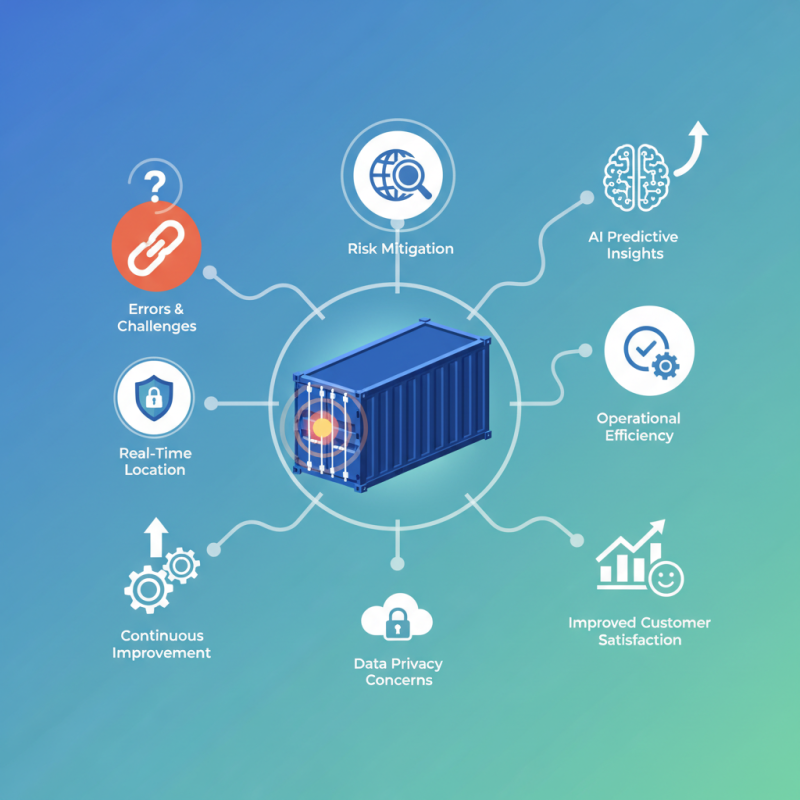
Container number tracking not only provides visibility but also helps mitigate risks. For instance, companies can quickly identify delays caused by port congestion or customs issues. By leveraging advanced tracking systems, businesses can enhance decision-making and improve customer satisfaction. However, it is also important to acknowledge that errors in tracking can occur. This might lead to misplaced shipments or inaccurate status updates, highlighting the need for continuous improvement in these systems.
Moreover, integrating container number tracking with AI can significantly boost its effectiveness. Advanced systems can analyze data for better predictive insights. Yet, as with any technology, there are challenges. Firms must address potential data privacy concerns. Ensuring reliability while maintaining security is essential for progressing in this arena.
What is Container Number Tracking: An Overview of Its Importance
Container number tracking plays a crucial role in modern logistics. It enables businesses to monitor shipments throughout their journey. Clients can easily locate their containers in transit. This transparency enhances trust between suppliers and customers. It helps in timely decision-making. When problems arise, tracking systems provide critical information to address them.
The importance of container number tracking extends beyond mere location. It affects supply chain efficiency. Delays can be costly, both in time and money. Companies can reduce these risks through effective tracking. Accurate data allows them to anticipate issues. Yet, not all tracking systems are flawless. Sometimes, updates may lag or inaccuracies can occur. This creates uncertainty, which no business can afford.
Investing in the right tracking technology is essential. It should offer real-time updates and user-friendly interfaces. Businesses must remain vigilant. Regular audits of the tracking data can help. A minor error can lead to significant consequences. Ensuring accuracy is key to maintaining smooth operations. It's a constant journey of improvement and learning.
The Role of Container Numbers in Global Supply Chain Management
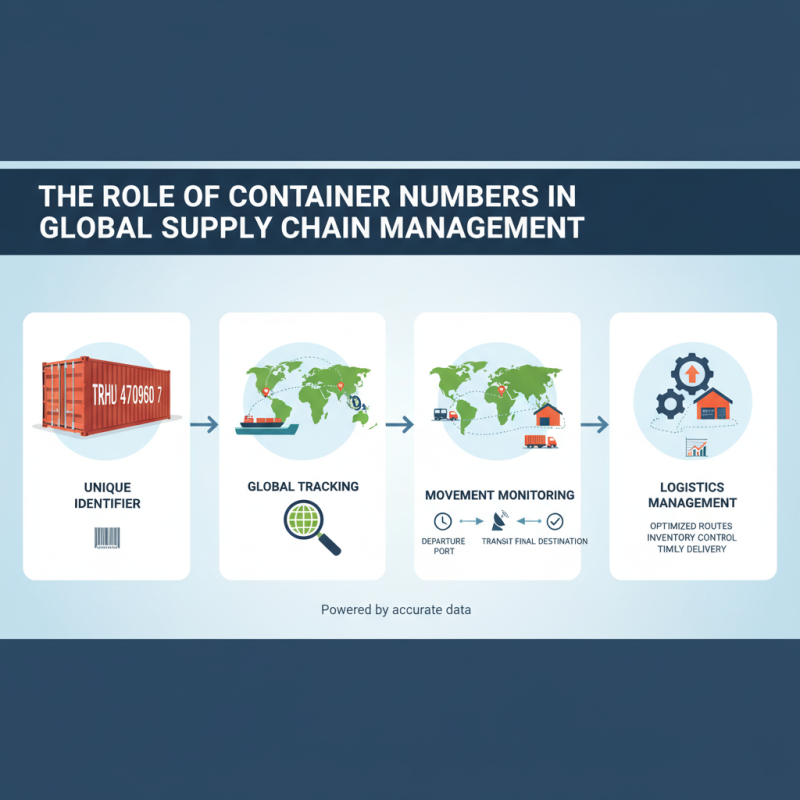
Container numbers play a vital role in global supply chain management. Every shipping container has a unique number. This number helps to track the container throughout its journey. From the moment it leaves the port to its arrival at the final destination, every movement is monitored. Companies rely on this information to manage their logistics effectively.
In an industry that moves billions of containers annually, accuracy is crucial. However, errors can occur. Sometimes, containers are misidentified or misplaced. Such issues can lead to delays and increased costs. Not all systems are foolproof. Transparency and communication among stakeholders are often lacking. A breakdown in communication can disrupt the entire supply chain. Thus, businesses need to ensure that they regularly update and verify container data. This helps in minimizing errors and improving overall efficiency.
Moreover, the role of container numbers extends beyond logistics. They play a part in customs clearance and compliance. Regulatory authorities depend on this data to ensure safe and legal transport. Mismanagement of container tracking can result in fines or legal issues. Hence, stakeholders must pay closer attention to the accuracy of container number tracking. Fine-tuning these processes may require time and effort, but the benefits are undeniable.
How Container Tracking Technologies Enhance Shipment Visibility
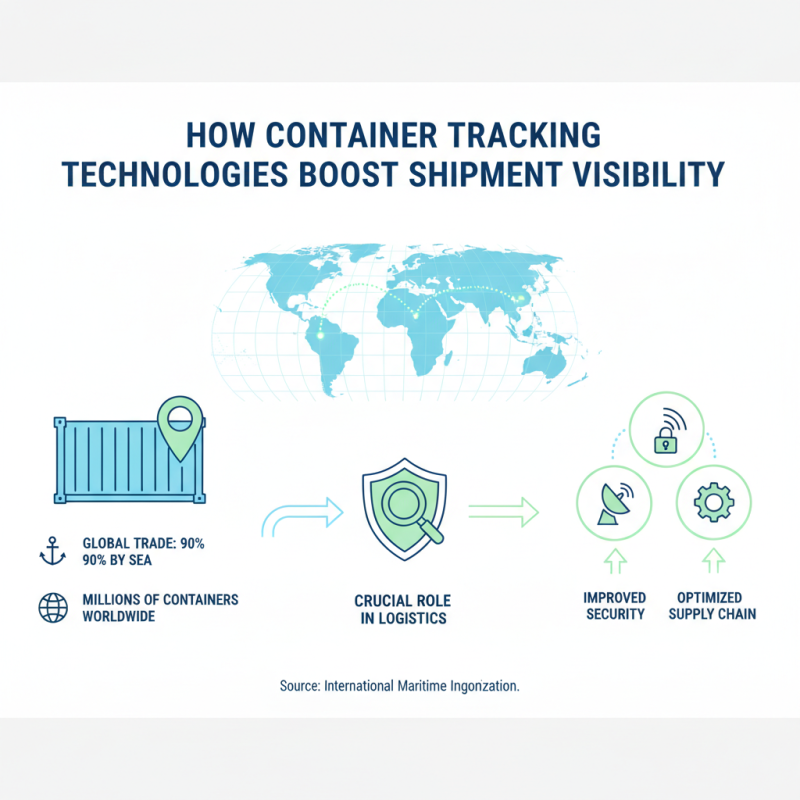
Container tracking technologies play a crucial role in enhancing shipment visibility in the logistics industry. With global trade increasing, it's essential to know where your cargo is at all times. According to a report by the International Maritime Organization, about 90% of the world’s trade is carried by sea. This means robust technologies are needed to track millions of containers worldwide.
Advanced tracking systems use GPS, RFID, and IoT sensors. These technologies provide real-time location data. For example, IoT sensors can monitor a container's conditions, like temperature and humidity. This is vital for perishable goods, ensuring they arrive safely. However, integrating these technologies can be challenging. Many companies face issues with data accuracy and system interoperability.
Another study shows that about 70% of logistics companies have adopted some form of tracking technology. However, only 30% use it effectively. This highlights a gap in implementation. Visibility is more than just knowing the location. It involves understanding the entire supply chain process. Companies need to invest in training and infrastructure to maximize tracking benefits. There's much room for improvement.
Key Benefits of Using Container Number Tracking for Businesses
Container number tracking provides significant advantages for businesses engaged in shipping and logistics. By utilizing this system, companies can monitor the real-time status of their containers. According to a recent industry report, 75% of supply chain professionals claim that visibility of cargo improves operational efficiency. Access to accurate data enhances decision-making processes.
In addition, container tracking greatly reduces the risk of lost or damaged shipments. Approximately 30% of businesses reported fewer incidents of misplacement after implementing tracking systems. The ability to trace containers swiftly allows for prompt resolution of issues. This is a crucial aspect for companies aiming to maintain customer satisfaction. Many logistics experts suggest that effective tracking can result in a 10-15% increase in customer retention.
While the benefits are evident, some companies still face challenges in adopting these technologies. Integration with existing systems can be complex. Additionally, the investment in such tracking tools may seem daunting for smaller businesses. Continuous improvement and adaptation are necessary for growth. Embracing these tracking solutions could yield long-term benefits. Yet, understanding the hurdles of implementation is essential for success.
Container Number Tracking Usage Statistics
This chart illustrates the growth of container number tracking usage over the four quarters of a year. It highlights the increasing reliance on tracking systems by businesses to enhance their supply chain transparency and efficiency.
Industry Standards and Best Practices in Container Tracking Systems
Container tracking has become essential in the shipping industry. According to a recent report, 90% of global trade relies on container shipping. However, tracking these containers effectively remains a challenge. Industry standards aim to address this issue by promoting systematic practices.
Real-time visibility is a key aspect of modern container tracking systems. Most systems utilize GPS and RFID technology. For instance, RFID tags can help in reading multiple containers simultaneously. This enhances efficiency but may sometimes lead to inaccuracies due to signal interference. Best practices suggest regular audits of the tracking data. Yet, many companies overlook this step, causing discrepancies in records.
Data collection and sharing are crucial in ensuring transparency. The International Maritime Organization has set certain guidelines for data sharing. Many shippers struggle with integrating new technologies into existing systems. A report indicates that only 35% of companies fully utilize their tracking systems. This gap highlights the need for training and adaptation within the industry. Addressing these issues could lead to improved tracking efficiency and reliability.
What is Container Number Tracking and How Does it Work? - Industry Standards and Best Practices in Container Tracking Systems
| Tracking Dimension |
Description |
Importance |
Best Practices |
| Container Number |
A unique identifier assigned to a shipping container. |
Essential for tracking and managing shipments. |
Ensure accurate input of numbers during documentation. |
| Tracking Technology |
Technologies such as RFID, GPS, and barcodes used for tracking. |
Improves visibility and management of assets. |
Choose the right technology based on shipping routes. |
| Data Integration |
Combining tracking data with inventory and supply chain data. |
Enhances operational efficiency and decision-making. |
Utilize software solutions that support data syncing. |
| User Interface |
Dashboard or software that displays tracking information. |
Critical for ease of use and quick access to information. |
Design user-friendly interfaces that present data clearly. |
| Real-time Tracking |
Monitoring container location and status as it changes. |
Allows timely responses to issues and improves customer service. |
Implement systems that provide real-time updates. |