How to Choose the Best Air Freight Forwarder for Your Business?
Choosing the right air freight forwarder can be a daunting task for many businesses. An effective air freight forwarder can streamline your shipping processes. They can help you navigate complex logistics with ease. However, not all air freight forwarders offer the same level of service.
Experience matters when selecting an air freight forwarder. Look for one with a proven track record in your industry. Their expertise can greatly impact your supply chain efficiency. It is crucial to evaluate their customer service and reliability. A responsive forwarder can address issues promptly, ensuring your shipments arrive on time.
Sometimes, businesses make the mistake of choosing based solely on cost. While affordability is essential, it shouldn't be the only factor. A cheaper air freight forwarder may not provide the necessary service quality. Reflect on your company’s specific needs and the value you expect from a partnership. A thorough assessment can lead to better long-term results.

Understanding Your Shipping Needs and Requirements for Air Freight
When selecting an air freight forwarder, understanding your shipping needs is vital. Identifying the frequency and volume of shipments helps you find a suitable partner. For instance, according to industry data, companies shipping more than 100 times a year can benefit from dedicated services. On the other hand, occasional shippers may only need basic offerings.
Additionally, consider the types of goods you are shipping. Perishable items demand specialized handling. According to the International Air Transport Association (IATA), about 30% of consumers prefer air freight for fast delivery. However, if you're transporting heavy machinery or hazardous materials, robust compliance and safety measures are essential. This complexity requires forwarders with specific expertise in those areas.
Thinking about transit time also matters. Research indicates that 50% of businesses prioritize speed over cost. Yet, customers often overlook that faster shipping can lead to increased expenses. Balancing urgency with budget constraints is crucial when determining your needs. Regular evaluations of your air freight strategy can also uncover inefficiencies or hidden costs.
Understanding Air Freight Cost Components
Evaluating the Credentials and Experience of Air Freight Forwarders
When selecting an air freight forwarder, evaluating their credentials is crucial. Review their certifications. Valid accreditations from aviation authorities show professionalism. Look for memberships in industry organizations. These affiliations often indicate reliability and adherence to standards.
Experience plays a vital role. Ask about their history in air freight. A forwarder with years in the industry understands the complexities of international shipping. They’ve likely faced challenges and learned effective solutions. However, experience doesn’t always equal excellence. A long history isn’t a guarantee of quality service.
Check testimonials and references. Speak to past clients about their experiences. Did the forwarder meet deadlines and provide accurate documentation? Look for indicators of good communication. If past clients mention poor responses, consider it a red flag. The right forwarder should prioritize transparency and accountability. These traits are essential for a successful partnership in air freight.
How to Choose the Best Air Freight Forwarder for Your Business? - Evaluating the Credentials and Experience of Air Freight Forwarders
| Criteria |
Importance Level |
Evaluation Method |
Example Score (1-10) |
| Years of Experience |
High |
Document review and testimonials |
8 |
| Industry Specialization |
Medium |
Services offered and case studies |
7 |
| Network and Partnerships |
High |
Partnership agreements and network reach |
9 |
| Customer Service Quality |
High |
Client feedback and response time |
8 |
| Regulatory Compliance |
High |
Certificates and licenses verification |
10 |
| Pricing Transparency |
Medium |
Quotations and pricing policies |
6 |
| Technology Utilization |
Medium |
Tech stack description and usability tests |
7 |
Analyzing Costs: Comparing Rates and Services of Different Forwarders
When selecting an air freight forwarder, analyzing costs is crucial. Different forwarders offer varying rates and services. Understanding these differences can save your business money. Rate comparisons often include base charges, fuel surcharges, and additional fees. A low base rate may not reflect the total cost accurately. Hidden fees are common; always ask for a full breakdown of costs.
Services also play a significant role in cost analysis. Some forwarders provide additional features like tracking, insurance, or customs clearance assistance. These add-ons can enhance your supply chain but may increase overall expenses. Evaluate what services you truly need based on your business model. If a service seems unnecessary, it might not be worth the extra cost.
Documentation is another factor to consider. Some forwarders may require specific paperwork that others do not. This can lead to delays and additional costs. Ensure you understand each forwarder's documentation requirements clearly. Reflecting on these aspects can lead to better decision-making while choosing an air freight forwarder that aligns with your business needs.
Assessing Transit Times and Reliability in Freight Forwarding
When assessing transit times and reliability in freight forwarding, businesses must prioritize data-driven choices. One crucial factor is the average transit time for air freight, which typically ranges from 1 to 7 days. However, this can vary based on route and shipping volume. According to the International Air Transport Association (IATA), on-time performance in air freight hovered around 65% in 2022. This statistic highlights the importance of choosing reliable forwarders.
Reliability is not just about the speed of delivery. It includes consistency in meeting timelines. A report from the Freight Transportation Research Board emphasizes that a 15% delay can significantly impact supply chains. Businesses often overlook the implications of delays. They can lead to increased costs or loss of customers. Forwarders with strong track records in both transit times and reliability offer better assurance for businesses.
Investigating a forwarder's performance history can prove beneficial. Look for metrics like delivery success rates and average transit times over the past year. The more information available, the better the decision-making process can be. Keep in mind that frequent changes in routing practices may reflect underlying issues. Companies should ask about any fluctuations they have experienced recently. Preparing for the unknown is vital in air freight logistics.
Checking Compliance and Certifications in the Air Freight Industry
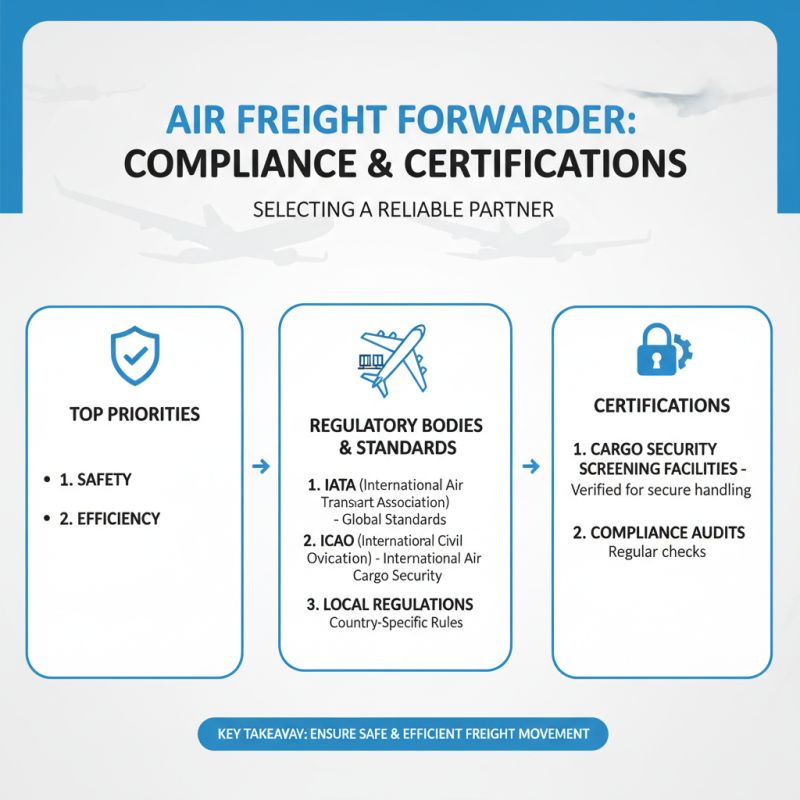
When selecting an air freight forwarder, compliance and certifications should be top priorities. According to a study by the International Air Transport Association (IATA), compliance with regulations is crucial for safe and efficient freight movement. Forwarders must adhere to the International Civil Aviation Organization (ICAO) standards and other local regulations. Reliable forwarders are usually Certified Cargo Security Screening Facilities, demonstrating their commitment to safety.
Certifications also reflect the forwarder's industry knowledge. For instance, the Certified International Freight Forwarder (CIFF) designation indicates expertise in international shipping. A forwarder with this certification understands complex customs regulations and trade agreements. This knowledge ensures that shipments move smoothly across borders, minimizing delays and reducing costs.
However, not all certified forwarders offer the same level of service. Some may lack experience in specific industries. Research indicates that 30% of companies face issues with forwarding delays due to inadequate understanding of their cargo's requirements. Therefore, it's essential to thoroughly vet potential forwarders, examining their performance metrics and client reviews. Ensure they can provide tailored solutions that address your unique shipping needs.