How to Choose the Right Freight Carrier for Your Needs?
Choosing the right freight carrier is crucial for successful shipping. As logistics expert John Smith once said, “The right carrier can make or break your supply chain.” In an industry with numerous players, finding the perfect match can be daunting. Each freight carrier offers distinct features and pricing structures.
Consider your specific needs before selecting a carrier. Look at factors such as transit times, reliability, and service options. Some carriers specialize in certain regions or freight types, while others may lack flexibility. A carrier that seems ideal might not fit your requirements when you evaluate their strengths and weaknesses. Take time to research, compare, and reflect on feedback from other users in your industry.
Strong communication with potential carriers is vital. This helps in understanding their services and limitations. It’s also an opportunity to gauge their response time and customer service. Ultimately, a freight carrier should align with your business goals and shipping demands.

Consider Your Shipping Requirements and Budget
Choosing the right freight carrier is crucial for your business. Start by assessing your shipping requirements. Consider factors like the size and weight of your shipments. Different carriers excel in different areas. A report by FreightWaves noted that 70% of shippers prioritize transit time. Understanding your urgency helps narrow down your options.
Next, analyze your budget. Costs can vary widely among carriers. According to the Logistics Management, freight rates can fluctuate by 10-15% depending on seasonality. Be realistic about what you can afford. It may save money to sacrifice speed for lower rates. Find a balance between cost and service quality.
Tip: Get quotes from multiple carriers. This helps identify reasonable rates. Don't settle for the first offer. Evaluate each carrier’s service level. Look for hidden fees that could affect your budget later. Remember, a seemingly cheap option might lead to issues. Mitigate risks by researching carrier reputation and reliability.
Evaluate Different Freight Carrier Options
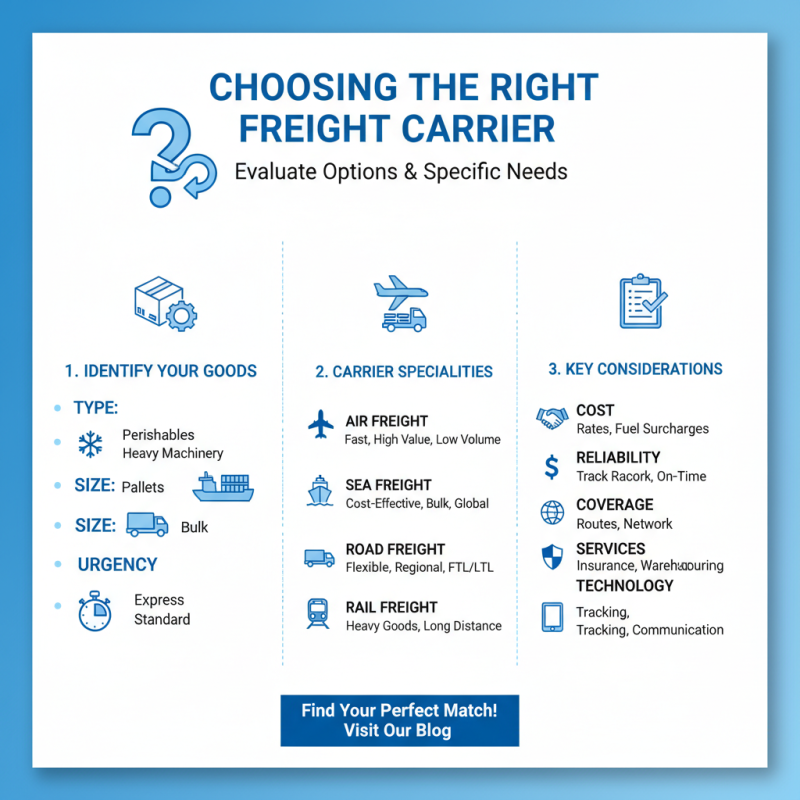
Choosing the right freight carrier can feel overwhelming. It's essential to evaluate different options while considering specific needs. Start by listing the type of goods you need to transport. Different carriers excel in various areas: some focus on perishables, while others specialize in heavy machinery.
Cost is a critical factor, but it shouldn't be the only one. Sometimes, lower costs can mean lower reliability. Consider the carrier’s tracking options. Real-time updates can ease your mind during transit. Communication is vital. A responsive carrier can make a huge difference during potential issues.
Also, think about the geographical coverage. Some carriers might not service your regions. Be aware of their delivery times. Delays can disrupt your business flow. Finally, ask for references. Past customer experiences can reveal insights that websites can’t. Finding the right fit may take time, but it’s worth the effort.
Assess Carrier Reputation and Reliability
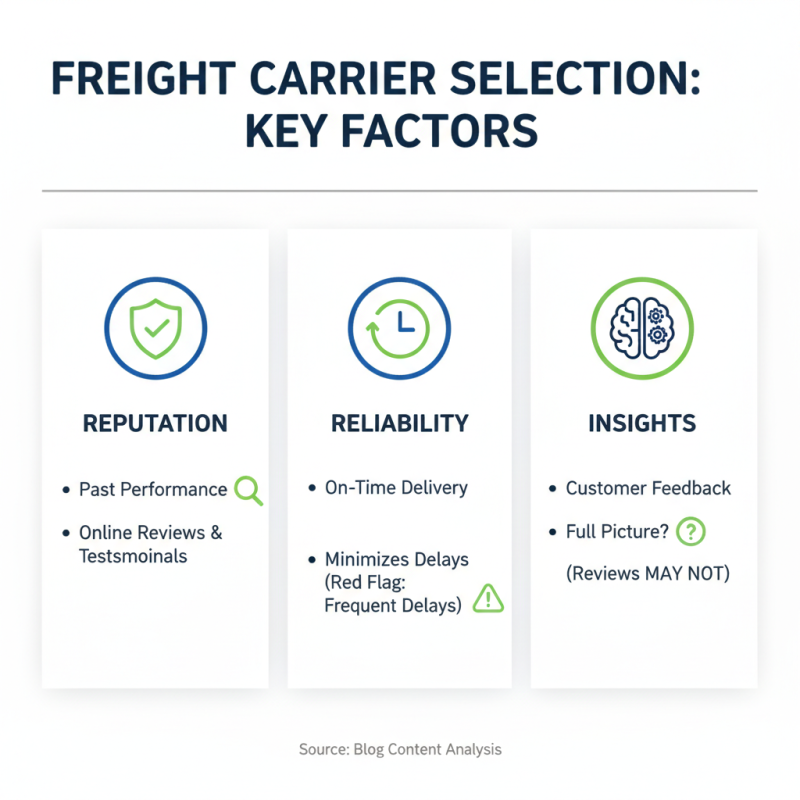
When selecting a freight carrier, reputation and reliability stand out as critical factors. A carrier's reputation often reflects its past performance. You might want to look at online reviews and testimonials. Feedback from previous customers can reveal hidden strengths or weaknesses. For instance, delays can be a red flag. However, sometimes, reviews may not paint the full picture.
Reliability is not just about timeliness. It's also about consistency in service quality. Some carriers show promise but fail under pressure. A carrier that can handle peak seasons remains essential. It’s crucial to ask about their tracking systems. Good tracking provides peace of mind. Yet, simplicity in communication can often be overlooked. If you struggle to get answers, that’s a warning sign.
While you can gather information, personal experience matters too. Reaching out for quotes can reveal responsiveness. A slow response may indicate future problems. Additionally, make note of how they handle inquiries. Unprofessional behavior can reflect their overall service quality. In the end, weighing reputation against reliability can help you find the right match for your freight needs.
Review Service Offerings and Specializations
When selecting a freight carrier, reviewing their service offerings and specializations is crucial. Different carriers excel in various areas. Some may focus on temperature-sensitive goods, while others prioritize heavy machinery. Knowing these specialties helps avoid potential issues.
Industry reports indicate that about 70% of shippers consider service type as a primary selection factor. Carriers often offer a mix of services. This can include ground, air, or ocean freight. Each mode has distinct advantages. For example, air freight is faster but more expensive, while ocean freight is cost-effective for bulky shipments.
Additionally, many carriers emphasize technology. Tracking tools can enhance visibility. However, not all carriers invest equally. A lack of comprehensive tracking might lead to frustration and lost shipments. Relying solely on the cheapest option might also backfire. Sometimes, higher costs translate into better reliability and service quality. Therefore, reflecting on the total value of what each carrier provides is essential.
Analyze Pricing Structures and Contract Terms
When selecting a freight carrier, understanding pricing structures is crucial. Carriers may charge based on weight, distance, or type of goods. Some might offer per-mile rates while others have flat fees. Hidden fees often appear in contracts, such as fuel surcharges or insurance costs.
Tip: Always ask for a breakdown of costs. This will help you compare carriers more easily. A transparent pricing structure can save you money and prevent surprises later. Check if they offer discounts for volume shipping.
Contract terms can significantly impact your decision. Short-term contracts might provide flexibility, but long-term agreements could offer lower rates. Read the fine print carefully; some terms can be vague or misleading. Watch for clauses that might lock you in or apply unexpected penalties.
Tip: Don’t hesitate to seek clarification. If something feels off, ask questions. A reputable carrier will provide clear answers. Additionally, consider customer service quality. Poor communication may lead to issues down the line, causing delays and frustration. Always trust your instincts when choosing the right partner.