How to Choose the Best International Freight Forwarder for Your Business
In the world of global trade, selecting the right international freight forwarder can significantly impact the efficiency and cost-effectiveness of your shipping operations. As businesses expand their reach across borders, the intricacies of international freight become increasingly complex. Industry expert David Chen, CEO of Global Shipping Solutions, emphasizes this point: "The choice of a freight forwarder is not just about logistics; it's about partnership and ensuring your goods move smoothly through the intricate networks of international trade."
Finding the best international freight forwarder for your business requires careful consideration of various factors, including expertise in your specific industry, service offerings, and communication capabilities. With a multitude of players in the market, understanding what sets apart a competent forwarder from an average one is crucial for maintaining your supply chain's integrity.
Moreover, as international trade regulations and logistics technologies evolve, the importance of staying informed and adaptable cannot be overstated. By choosing a freight forwarder that aligns with your business goals and values, you can ensure a seamless flow of goods, ultimately enhancing your competitive edge in the global marketplace.

Understanding the Role of International Freight Forwarders in Trade
International freight forwarders play a crucial role in global trade by acting as intermediaries between businesses and carriers. Their primary function is to facilitate the movement of goods across international borders, which involves a myriad of logistical tasks. These include negotiating freight rates, booking cargo space, and managing the documentation required for customs clearance. By leveraging their expertise and established networks, freight forwarders streamline the shipping process, enabling businesses to focus on their core operations while ensuring timely and efficient delivery of products.
In addition to basic shipping responsibilities, international freight forwarders provide valuable services that can significantly impact a business's supply chain management. They offer insights into regulations and compliance requirements specific to different countries, which can help prevent costly delays and fines. Moreover, many freight forwarders employ advanced technology to track shipments in real-time, provide visibility throughout the logistics process, and enhance communication between all parties involved. As a result, choosing the right freight forwarder not only simplifies the logistics of international shipping but also enhances overall operational efficiency, contributing to a company's success in the global marketplace.
Key Factors to Consider When Selecting a Freight Forwarder for Your Needs
When selecting a freight forwarder, one of the most important factors to consider is their industry expertise. A forwarder with extensive experience in your specific sector will better understand its nuances, regulatory requirements, and common challenges. Their familiarity with the logistics landscape can greatly enhance the efficiency of your supply chain and reduce potential delays. It is beneficial to inquire about their track record with similar shipments and their ability to navigate any obstacles that may arise.
Another critical aspect is the range of services offered by the freight forwarder. Evaluate whether they provide comprehensive solutions, including customs brokerage, documentation, cargo insurance, and real-time tracking. A forwarder that offers a full suite of services can simplify your logistics process and ensure that you have a single point of contact for all your shipping needs. Additionally, consider their global network of agents and partners, as this can significantly impact shipping speed and reliability, especially for international shipments. A robust network not only facilitates smoother operations but also provides you with greater flexibility in choosing shipping routes and options.
Evaluating Freight Forwarder Performance Metrics: Cost, Reliability, and Speed
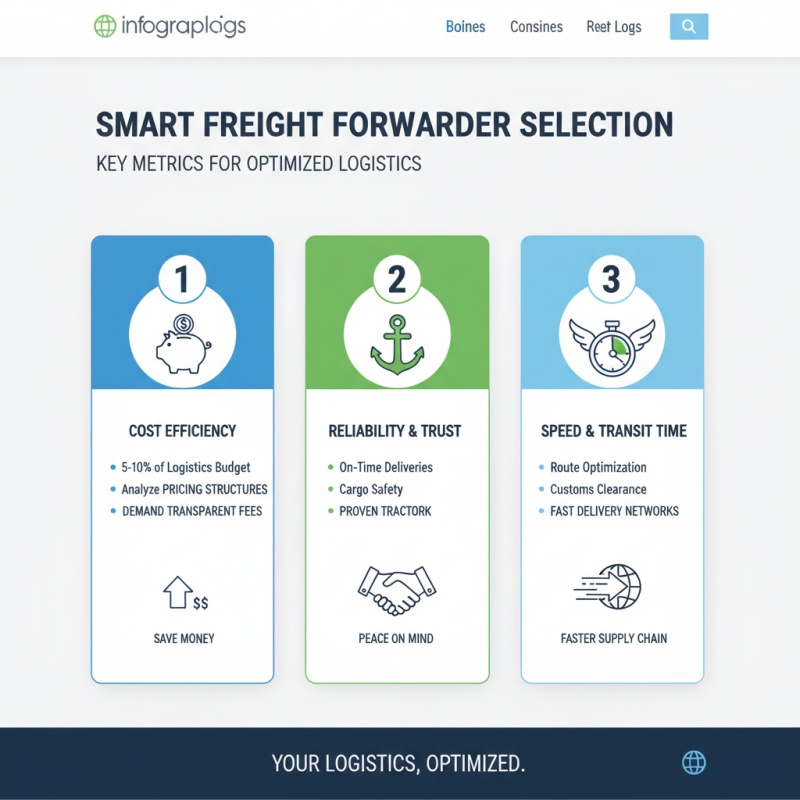
When selecting an international freight forwarder, evaluating performance metrics such as cost, reliability, and speed is crucial for ensuring your logistics operations run smoothly. According to industry reports, freight costs can account for up to 5-10% of a company’s overall logistics budget. Therefore, it's essential to analyze the pricing structures of potential forwarders and look for transparent pricing without hidden fees. This will allow you to manage your operational costs effectively while still receiving quality service.
Reliability is another key factor to consider when choosing a freight forwarder. Industry studies indicate that 75% of shippers rate reliability as the most critical criterion for selecting a forwarder. To gauge reliability, research your prospective forwarders' track records, including their on-time delivery rates and customer reviews. Engaging with freight forwarders who have strong performance metrics in this area can significantly mitigate risks in your supply chain.
**Tips:** Prioritize freight forwarders that offer comprehensive tracking systems to enhance visibility throughout the shipping process. Additionally, ask for references and case studies that demonstrate a forwarder's ability to deliver consistently under various circumstances. When it comes to speed, determine your business’s urgency level; some forwarders can offer expedited services at a premium, which may be justified depending on your operational needs. Always weigh speed against cost to find the best balance for your business model.
The Importance of Industry Experience and Network in Freight Forwarding
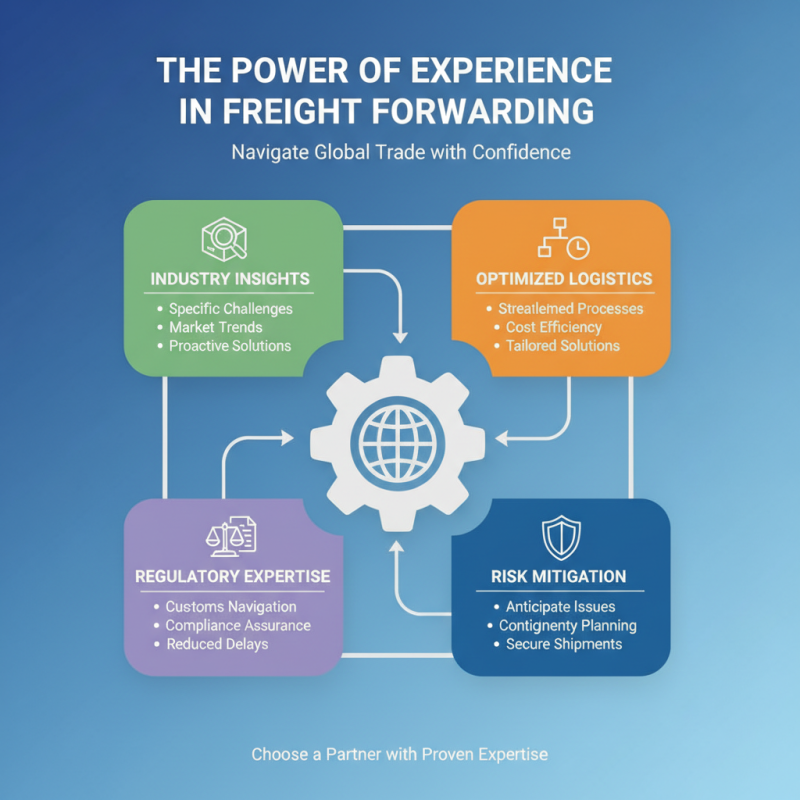
When selecting an international freight forwarder, the significance of industry experience cannot be overstated. A freight forwarder with substantial experience in your specific industry will possess valuable insights into the unique challenges and requirements that your business may face. This familiarity allows them to proactively address potential issues, streamline logistics processes, and offer tailored solutions that align with your operational needs. An experienced forwarder can also navigate complex regulations and customs requirements more effectively, minimizing delays and ensuring compliance.
Equally important is the forwarder's network, which plays a crucial role in their ability to provide efficient and reliable service. A robust network of carriers, agents, and partners around the globe can lead to better negotiation power, access to capacity, and contingency options in case of unexpected disruptions. A well-connected freight forwarder can facilitate smoother transportation, manage logistics across various regions, and respond quickly to changing market dynamics. Ultimately, choosing a forwarder with both industry expertise and a strong network will empower your business to enhance its supply chain efficiency and meet customer demands more effectively.
Assessing Value-Added Services Offered by Freight Forwarders
When selecting an international freight forwarder, evaluating the
value-added services they offer is crucial for enhancing your logistics strategy.
Beyond basic shipping, freight forwarders can provide a suite of additional services that can
streamline operations and reduce costs. These services may include
inventory management, customs brokerage, and cargo insurance,
all of which are integral in navigating the complexities of global trade. Understanding how a forwarder's
value-added services can complement your supply chain requirements allows you to choose a partner that not
only meets your shipping needs but also enhances operational efficiency.
Furthermore, it's essential to assess the quality and scope of these value-added services. For instance,
some freight forwarders may offer technology solutions such as
tracking systems that provide real-time updates on shipment status, while others may provide
comprehensive logistics consulting to help optimize routes
and reduce transit times. In addition, the ability to handle special cargo
requirements, including temperature-sensitive or high-value items, can also serve as a critical
differentiator. By aligning the freight forwarder's services with your business
objectives, you can forge a partnership that supports your growth and adapts to changing industry
dynamics.