Why Choose Air Freight for Your Global Procurement Needs?
In today’s fast-paced global market, businesses are increasingly relying on air freight for their procurement needs. Industry expert John Smith, an authority in logistics, emphasizes, "Air freight is not just a mode of transport; it is a catalyst for growth." Companies face the challenge of ensuring timely deliveries while managing costs. Choosing air freight presents a viable solution to these demands.
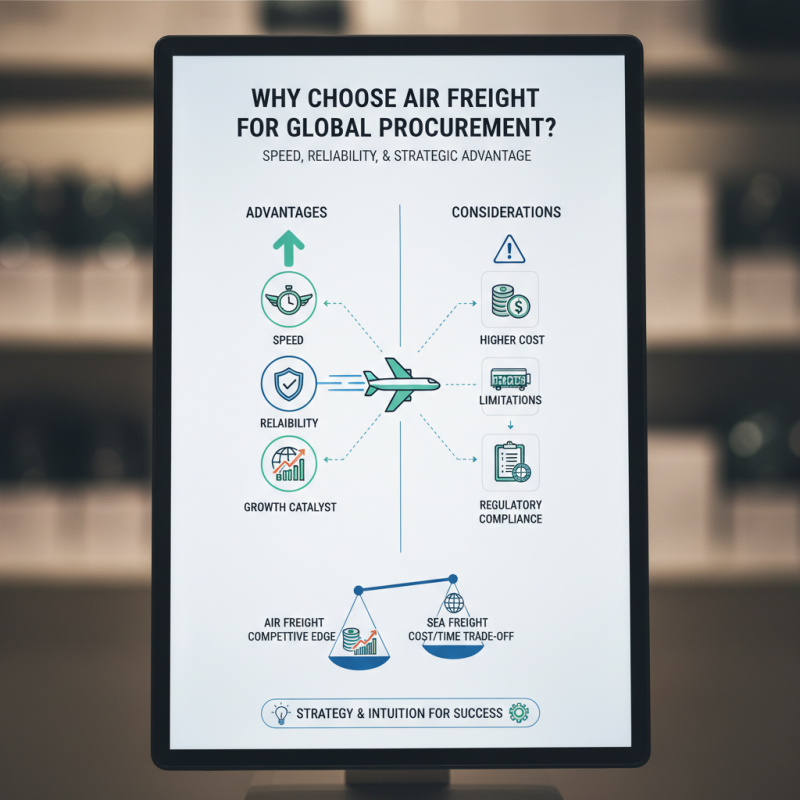
Air freight offers several advantages, including speed and reliability. It allows businesses to ship products across long distances in a fraction of the time compared to sea freight. However, it's essential to consider the trade-offs involved. Costs can be significantly higher, and space may be limited on flights. This can lead to potential delays, especially during peak seasons.
Moreover, businesses must ensure compliance with international regulations when shipping goods by air. This process can be complex and requires thorough documentation. Reflecting on these challenges helps companies strategize better for their future procurement needs. Utilizing air freight effectively can lead to a competitive edge, but understanding its intricacies is critical for success.
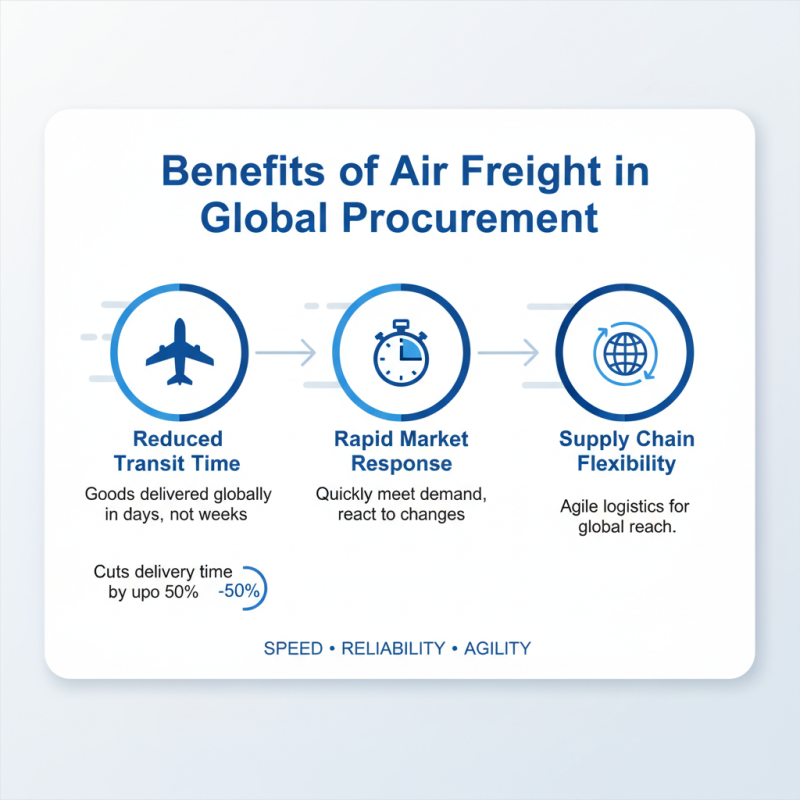
Benefits of Air Freight in Global Procurement
Air freight offers a range of benefits for global procurement, enhancing the speed and flexibility of supply chains. One major advantage is the significantly reduced transit time. Air freight can deliver goods across continents in just a few days, compared to weeks via ocean freight. Statistically, shipments by air can cut delivery times by up to 50%. This rapid movement allows businesses to respond quickly to market demands.
Moreover, air freight provides a level of reliability that is often unmatched. In a recent industry report, 81% of logistics professionals noted that air freight has a lower risk of delays compared to sea freight. This reliability is crucial in industries with perishable goods or fast-moving consumer products. While costs can be higher, the reduction in inventory holding and potential stockouts often makes air freight the smarter economic choice.
However, challenges persist. The air freight sector is subject to fluctuating fuel prices and capacity constraints. These factors can impact overall pricing and availability. Businesses must weigh these potential issues against the urgent need for swift procurement. Balancing cost and speed is an ongoing conversation in the logistics community, reflecting the complexities of modern supply chains.
Speed and Efficiency: Why Air Freight is Ideal for Time-Sensitive Goods
Air freight is often the go-to option for businesses requiring speed and efficiency. When goods are time-sensitive, air transport becomes indispensable. Products like medical supplies or perishable items need to reach their destinations quickly. Delays in these industries can lead to significant issues, including financial losses or compromised safety.
The logistics of air freight allow for faster transit times. Unlike sea freight, which can take weeks, air shipping can cut that down to mere days. This speed is crucial for companies that need to maintain a competitive edge. However, challenges remain. Air freight can be expensive, and businesses must weigh the benefits against the cost. Understanding the complexities of international regulations can also pose obstacles.
Even with these challenges, the advantages of air freight often outweigh the drawbacks. Attention to detail is essential in managing the shipping process. Accurate documentation and timely communication can make a significant difference. Businesses may need to navigate fluctuating rates and potential delays due to weather. The fast pace of air freight truly demands careful planning and adaptability.
Cost Considerations: When Air Freight Makes Financial Sense
Cost considerations play a crucial role in selecting air freight for global procurement. Many businesses initially perceive air freight as an expensive option. However, it can be more cost-effective than anticipated. When speed is essential, air freight can reduce inventory costs. Delays in supply chains can be costly, especially in highly competitive markets. Air freight minimizes these risks.
It’s essential to analyze specific scenarios where air freight could save money. Time-sensitive products, such as electronics or perishable goods, often justify higher shipping costs. The urgency of getting these items to market can lead to increased sales and faster turnover. Companies need to evaluate the trade-offs between shipping costs and potential revenue gains. Sometimes, waiting for slower shipping methods could result in missed opportunities.
Businesses must also consider hidden costs. Warehouse fees for holding inventory can accumulate, impacting the overall budget. Choosing air freight can significantly reduce these costs. However, companies should be mindful of their supply chain strategies. Not every shipment needs to fly. Some may benefit from ocean freight, while others may require air. Recognizing these nuances forms a key part of smart logistics planning.
Why Choose Air Freight for Your Global Procurement Needs? - Cost Considerations: When Air Freight Makes Financial Sense
| Shipping Method |
Transit Time (Days) |
Cost per Kilogram ($) |
Typical Use Cases |
| Air Freight |
1-3 |
5.00 - 12.00 |
Perishable Goods, Electronics, Urgent Shipments |
| Sea Freight |
15-30 |
1.00 - 3.00 |
Bulk Goods, Non-Urgent Shipments |
| Road Freight |
3-10 |
2.00 - 5.00 |
Regional Deliveries, Heavy Goods |
| Rail Freight |
5-15 |
1.50 - 4.00 |
Heavy Loads, Cross-Country Shipping |
Safety and Reliability: Air Freight’s Advantage in Secure Shipping
Air freight offers a distinctive advantage when it comes to safety and reliability in secure shipping. With stringent regulations governing air transport, goods are less likely to encounter risks during transit. Handling procedures in airports are typically rigorous, ensuring a high level of care. This fosters a sense of trust among businesses relying on timely deliveries.
The speed of air freight also enhances safety. Shorter transit times mean that products spend less time in vulnerable positions. perishable items, for example, benefit greatly. Their exposure to potential harm is minimized. However, businesses must constantly assess the limits of this mode. Not all goods are suitable for air transport, which requires careful consideration.
Nonetheless, unforeseen circumstances can still arise. Weather conditions can delay flights, affecting planned shipments. It is crucial to have contingency plans in place. While air freight is reliable, understanding its limitations will help businesses make informed decisions. Smart logistics also involve finding the right balance each time. Prioritizing safety while maintaining efficiency is a continuous challenge.
Air Freight Safety and Reliability Comparison
This chart illustrates the advantages of air freight in terms of safety and reliability compared to other shipping methods, highlighting key performance indicators such as Damage Rates, Shipping Times, and Delivery Accuracy.