Best Supply Chain Solutions for Global Buyers in 2026?
In 2026, the landscape of supply chain solutions will take center stage for global buyers. A report by McKinsey reveals that 79% of executives consider supply chain management crucial for their competitiveness. The complexities of global trade demand innovative strategies. According to industry expert Dr. Emily Carter, “Adaptable supply chain solutions are key to navigating the unpredictable market dynamics."
As businesses face rising costs and fluctuating consumer demands, the focus will shift to agile supply chain solutions. Companies must adopt technology to enhance visibility and efficiency. The World Economic Forum notes that 86% of companies struggle with supply chain disruptions. This indicates a pressing need for more robust systems. Yet, challenges remain. Some firms still rely on outdated practices, limiting their growth potential.
It's essential for companies to engage in deeper analysis of their supply chain solutions. Relying solely on established norms could hinder progress. The shift towards sustainability adds another layer of complexity. Buyers must embrace change while being wary of potential risks. Fostering resilience in their supply chains will be a core priority, redefining success in the global marketplace.

Emerging Trends in Global Supply Chain Solutions for 2026
As we look towards 2026, the landscape of global supply chains is evolving rapidly. Digital transformation continues to play a crucial role. Companies are increasingly adopting artificial intelligence and machine learning to enhance efficiency. These technologies can optimize inventory management and predict demand more accurately. However, reliance on technology comes with risks. Cybersecurity threats are a growing concern, leaving businesses vulnerable to attacks.
Sustainability is another key trend shaping supply chain solutions. More buyers demand eco-friendly practices. Organizations are examining their carbon footprints and sourcing more responsibly. Yet, achieving sustainability is often complex. Balancing cost, efficiency, and environmental impact presents challenges. Some companies struggle to implement greener practices effectively.
Collaboration among stakeholders is becoming essential. Building stronger partnerships within the supply chain improves visibility. This transparency can lead to faster decision-making. However, fostering collaboration is not always straightforward. Different goals and cultures can create friction among partners. Addressing these differences requires ongoing effort and open communication.
Key Technologies Shaping Supply Chain Management for Global Buyers
In the evolving landscape of supply chain management, several key technologies are reshaping how global buyers operate. Artificial intelligence and machine learning are at the forefront. They analyze vast amounts of data, predicting demand and optimizing inventory management. Buyers can make informed decisions. However, reliance on algorithms can sometimes yield unexpected outcomes. It requires constant monitoring.
Blockchain technology is also making waves. It enhances transparency and traceability, allowing buyers to track products throughout the supply chain. This boosts trust among stakeholders. Yet, the implementation can be complex. Ensuring all parties adopt this technology adds a layer of difficulty.
Sustainable practices are gaining traction too. Many buyers seek eco-friendly solutions in their supply chains. Technologies like IoT help monitor energy usage and reduce waste. It’s a step in the right direction, but challenges remain. Integrating these technologies without significant costs can be daunting. Balancing innovation with practicality is essential for future success.
Best Supply Chain Solutions for Global Buyers in 2026
| Technology |
Description |
Impact on Supply Chain |
Adoption Rate (%) |
| Artificial Intelligence |
Optimizes inventory management and forecasting. |
Reduces costs, improves accuracy. |
65% |
| Blockchain |
Enhances transparency and traceability in supply chains. |
Increases trust among stakeholders. |
50% |
| IoT (Internet of Things) |
Facilitates real-time tracking of goods. |
Enhances operational efficiency. |
70% |
| Robotic Process Automation (RPA) |
Automates repetitive tasks within supply chain processes. |
Reduces labor costs and errors. |
55% |
| Big Data Analytics |
Analyzes vast amounts of data for better decision making. |
Improves forecasting and decision-making speed. |
60% |
Strategies for Enhancing Supply Chain Efficiency in a Global Market
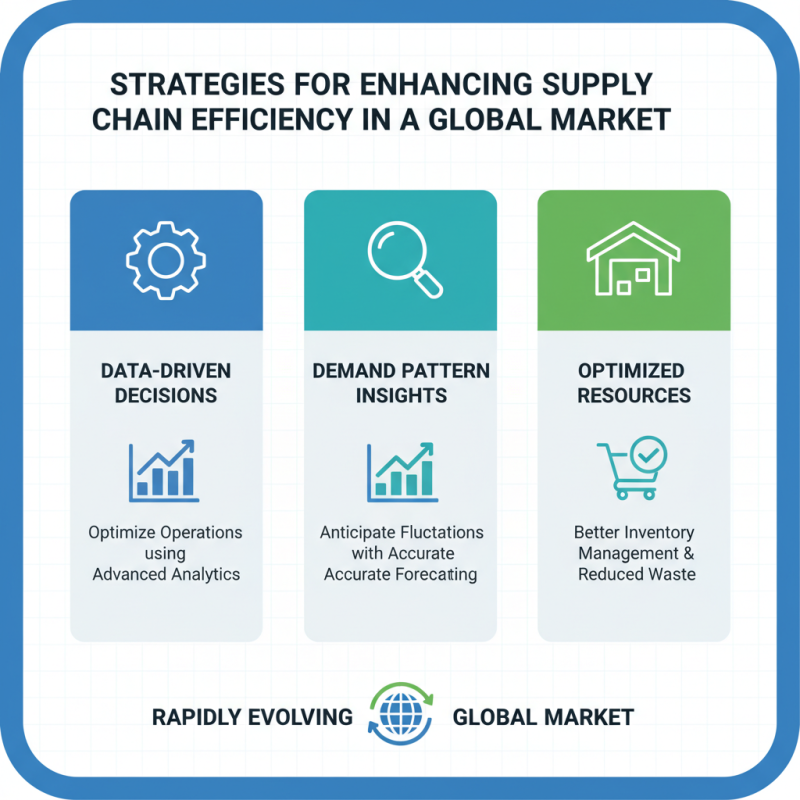
In a rapidly evolving global market, enhancing supply chain efficiency requires innovative strategies. Companies are now focusing on data-driven decisions to optimize their operations. Using advanced analytics can reveal insights into demand patterns. This approach helps businesses anticipate fluctuations. Accurate forecasting can lead to better inventory management and reduced waste.
Collaboration remains critical. Engaging with suppliers and logistics partners fosters trust and improves communication. Regularly sharing performance metrics can identify bottlenecks in the supply chain. Moreover, investing in digital tools, such as blockchain, ensures transparency in transactions. However, there are challenges. Implementing new technology can be costly and time-consuming. Companies must weigh the benefits against potential setbacks.
Sustainability is another growing concern. As global awareness increases, buyers demand eco-friendly solutions. Companies are exploring greener logistics and sourcing strategies. Yet, finding the balance between cost and sustainability can be tough. It's essential to analyze long-term impacts rather than short-term gains. Emphasizing adaptability will prepare businesses for future changes in the supply chain landscape.
Sustainable Practices in Supply Chain Solutions for 2026
As we approach 2026, sustainable practices in supply chain solutions are more critical than ever. The global demand for eco-friendly operations is reshaping how companies manage their logistics. Sustainable sourcing, renewable energy, and waste reduction are pivotal components. Buyers now prioritize partnerships that emphasize environmental responsibility. This shift not only benefits the planet but also enhances company reputations.
Implementing green practices is a journey filled with challenges. For example, transitioning to renewable energy sources can be costly and complex. Companies might struggle to find suppliers who share their sustainability goals. There's also the risk of greenwashing, where businesses exaggerate their eco-friendly initiatives. Transparency and genuine commitment are vital to overcome such obstacles. Buyers must ask tough questions and demand accountability from their suppliers.
Effective communication on sustainability efforts is key. Buyers appreciate clear reporting on environmental impacts and improvements. However, it's essential to strike a balance. Too much focus on sustainability can sometimes overshadow other operational needs. Companies need to ensure that while striving for sustainability, they remain efficient and profitable. Ultimately, the best supply chain solutions will integrate sustainable practices without compromising on service quality.
Supply Chain Sustainability Practices in 2026
This chart illustrates the estimated adoption rates of various sustainable practices among global buyers in the supply chain sector by 2026. The data reflects the increasing emphasis on sustainability as companies seek to reduce their environmental impact and improve operational efficiency.
Challenges and Opportunities for Global Buyers in Supply Chain Management
In 2026, global buyers face unique challenges in supply chain management. The demand for sustainability is rising. Buyers must adapt to environmental regulations. Supply chain transparency is crucial. Companies are under pressure to disclose their sourcing practices.
Supply chain disruptions are still a reality. Geopolitical tensions and natural disasters can halt operations. Buyers must prepare for unexpected changes. This uncertainty calls for flexibility and agile strategies. Forecasting demand accurately is more essential than ever. Inefficient inventory can lead to losses.
Tips: Consider investing in technology. Data analytics can enhance decision-making processes. Collaborate with suppliers for better communication. Building strong relationships can prevent future crises. Stay informed about industry trends. Continuous education keeps your skills sharp.