2026 Best International Freight Options for Global Shipping Solutions?
In today's globalized economy, selecting the right international freight solution is crucial for businesses. The competitive landscape demands efficient transportation options to ensure timely deliveries. With various modes of shipping available, understanding their benefits and drawbacks is necessary for success.
This article explores the best international freight options for 2026. Each choice presents unique advantages, but they also come with challenges. Businesses must consider factors like cost, speed, and reliability when selecting freight services.
Moreover, with the rapid changes in global trade, companies should remain adaptable. The shipping industry is evolving, necessitating constant reassessment of strategies. Ultimately, making informed decisions can enhance operational efficiency and customer satisfaction in an ever-changing marketplace.
Overview of International Freight Options for Global Shipping
When considering international freight options, businesses must evaluate multiple factors. These include cost, transit time, and reliability.
Air freight is fast but often expensive. Sea freight offers a cost-effective solution for large shipments but can take longer. Each method has unique benefits based on specific needs.
Choosing the right solution is not always clear-cut. For instance, a growing business might need to balance speed with budget constraints. Sometimes, unexpected delays occur, complicating logistics. Shippers might face challenges like customs clearance or unfavorable weather. It's crucial to assess these aspects, even after selecting a method.
Furthermore, technology plays a significant role in modern shipping. Tools for tracking and analytics can provide valuable insights. However, relying solely on these systems can be a pitfall. Human oversight is still necessary to ensure shipments arrive safely and on time. Each choice has consequences. Understanding these nuances can enhance global shipping strategies.
Factors Influencing the Choice of Freight Options
When choosing international freight options, several factors come into play. Understanding these factors is crucial for effective decision-making. Cost is one main concern. Different modes of transport vary significantly in price. Shipments by air are often faster but more expensive. In contrast, ocean freight is generally economical for large volumes but slower.
Transit time is another vital factor. Businesses may need to balance speed with cost efficiency. Urgent shipments often require air freight, while less time-sensitive deliveries can use sea freight. Distance also influences the choice of freight. Long distances may pose challenges in terms of logistics and timing. It is essential to assess the entire supply chain.
Reliability holds immense importance. Shippers desire assurance that their goods will arrive safely and on time. Weather, political climate, and logistics efficiency affect reliability. Poor planning can lead to delays or damaged goods. The value of the cargo should also shape your decision. High-value items often merit more secure shipping options. Therefore, selecting the right mix of factors can be intricate and requires thoughtful reflection.
2026 Best International Freight Options for Global Shipping Solutions
| Freight Option |
Cost per kg ($) |
Transit Time (Days) |
Reliability (%) |
Best For |
| Air Freight |
5.00 |
3-5 |
95 |
Urgent deliveries |
| Sea Freight |
1.50 |
20-30 |
90 |
Large cargo |
| Rail Freight |
2.00 |
10-15 |
85 |
Bulk goods |
| Truck Freight |
3.00 |
5-10 |
88 |
Domestic shipping |
| Express Courier |
10.00 |
1-2 |
98 |
Documents and small packages |
Comparative Analysis of Air, Ocean, and Land Freight Services
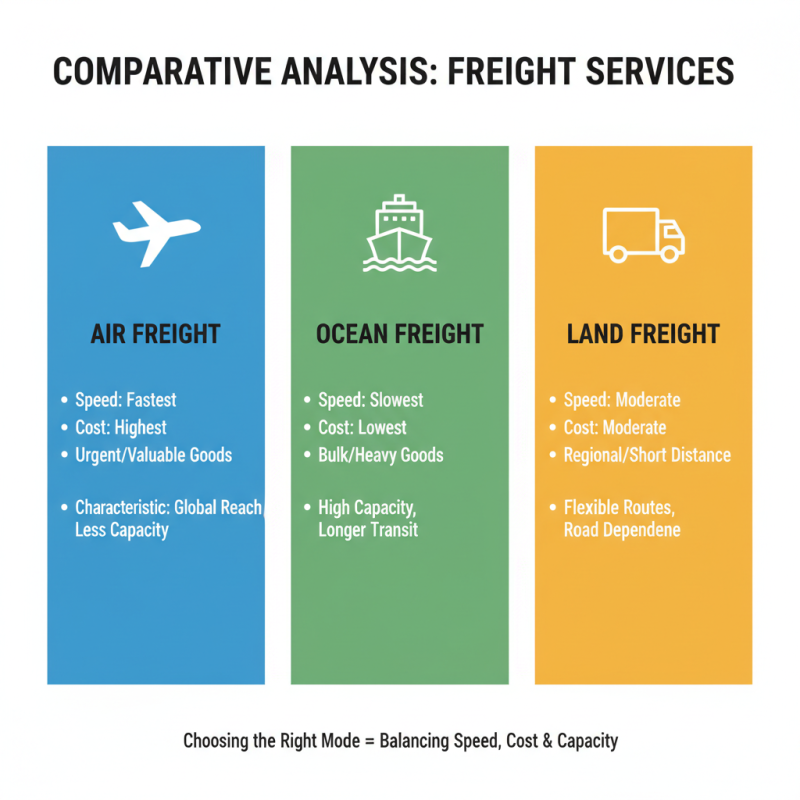
When considering global shipping solutions, it's crucial to evaluate air, ocean, and land freight services. Each mode has unique advantages and challenges. Air freight is fastest, ideal for urgent deliveries, but it can be costly. Ocean freight offers affordable rates for bulk shipments, yet it takes longer. Land freight, meanwhile, provides flexibility for shorter distances, but may face delays due to road conditions.
Tips: Assess your shipment size and urgency before choosing a service. For lighter and urgent cargo, air is the way to go. If you're transporting large volumes, ocean freight could save you money. Land freight works well if your destination is easily accessible.
It’s essential to consider potential complications. Air freight can face weather disruptions or tighter regulations. Ocean shipping has a risk of port congestion and longer transit times. Land trucks may encounter traffic or mechanical issues. Each option requires careful planning and consultation with logistics experts to avoid these pitfalls.
Emerging Technologies Shaping Global Shipping Solutions in 2026
Emerging technologies are revolutionizing global shipping solutions in 2026. The integration of artificial intelligence and machine learning is enhancing efficiency in logistics. These technologies analyze vast amounts of data to optimize routes and reduce costs. For instance, predictive analytics can forecast demand and streamline inventory management. This ensures that goods are delivered on time, minimizing delays.
Blockchain technology is also gaining traction in the shipping industry. It enhances transparency and security in transactions. By providing an immutable ledger, blockchain reduces paperwork and potential fraud. This technology fosters trust among partners and clients. However, the adoption of blockchain is not without challenges. Many companies still struggle with implementation and understanding its benefits.
Moreover, the rise of drone technology is reshaping last-mile delivery. Drones can quickly transport small packages, especially in urban areas. They reduce congestion and reliance on traditional vehicles. Yet, regulatory hurdles and air traffic management remain significant concerns. These emerging technologies hold promise but require ongoing evaluation to maximize their potential in global shipping.
Case Studies: Success Stories in International Freight Logistics
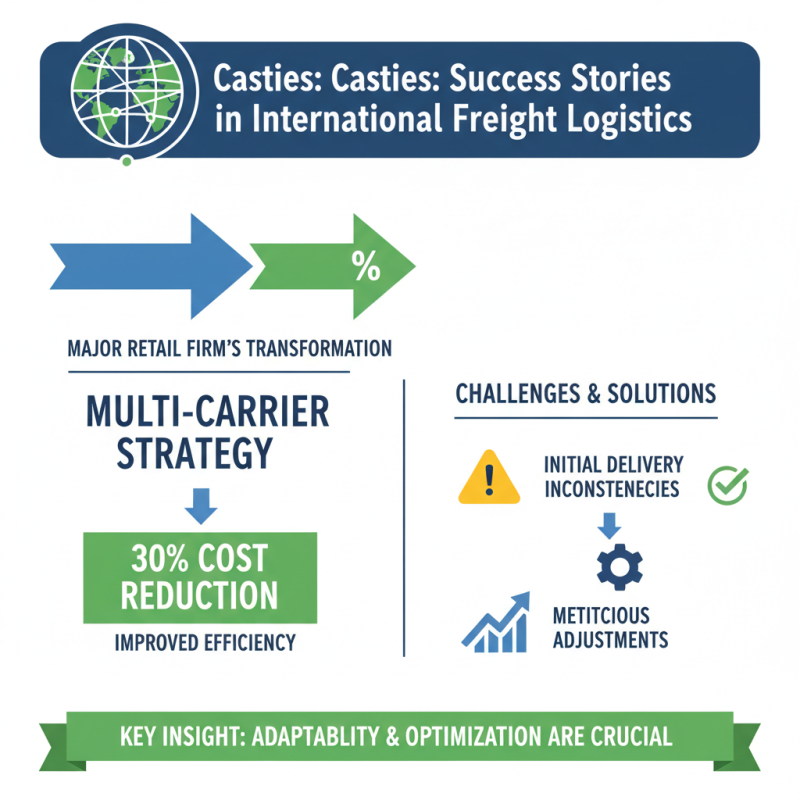
In the rapidly evolving landscape of international freight logistics, case studies reveal crucial insights into successful strategies. A notable example is a major retail firm's transformation in shipping processes. By adopting a multi-carrier strategy, they achieved a 30% reduction in shipping costs. This reduction did not come without challenges, though. The firm faced initial inconsistencies in delivery times, requiring meticulous adjustments.
Another case involves a technology company that streamlined its supply chain by implementing a predictive analytics system. This system improved their shipment accuracy by 25%. However, the early adoption highlighted the need for comprehensive training for staff. Many employees struggled with new software, indicating that technology alone cannot solve every logistical issue.
According to industry reports, 70% of global logistics companies are investing in digital tools to enhance efficiency. Yet, many still encounter barriers in integration. A careful approach to technology adoption and personnel training can lead to significant improvements. There is a fine line between innovation and operational reliability that organizations must navigate.